
2025 Challenge Winners
Elementary school
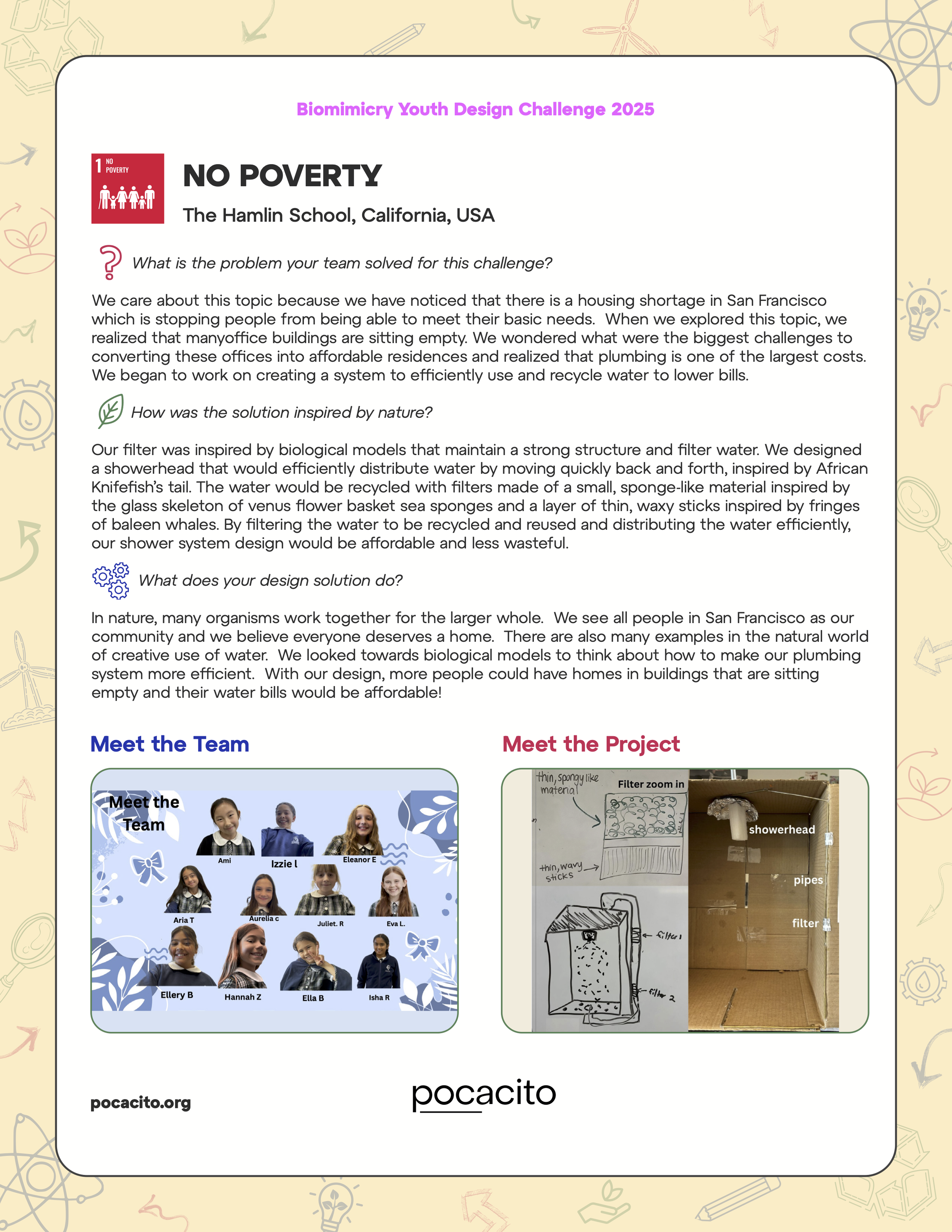
SDG 1 - No Poverty
The Hamlin School - California, USA, 4th grade, NO POVERTY
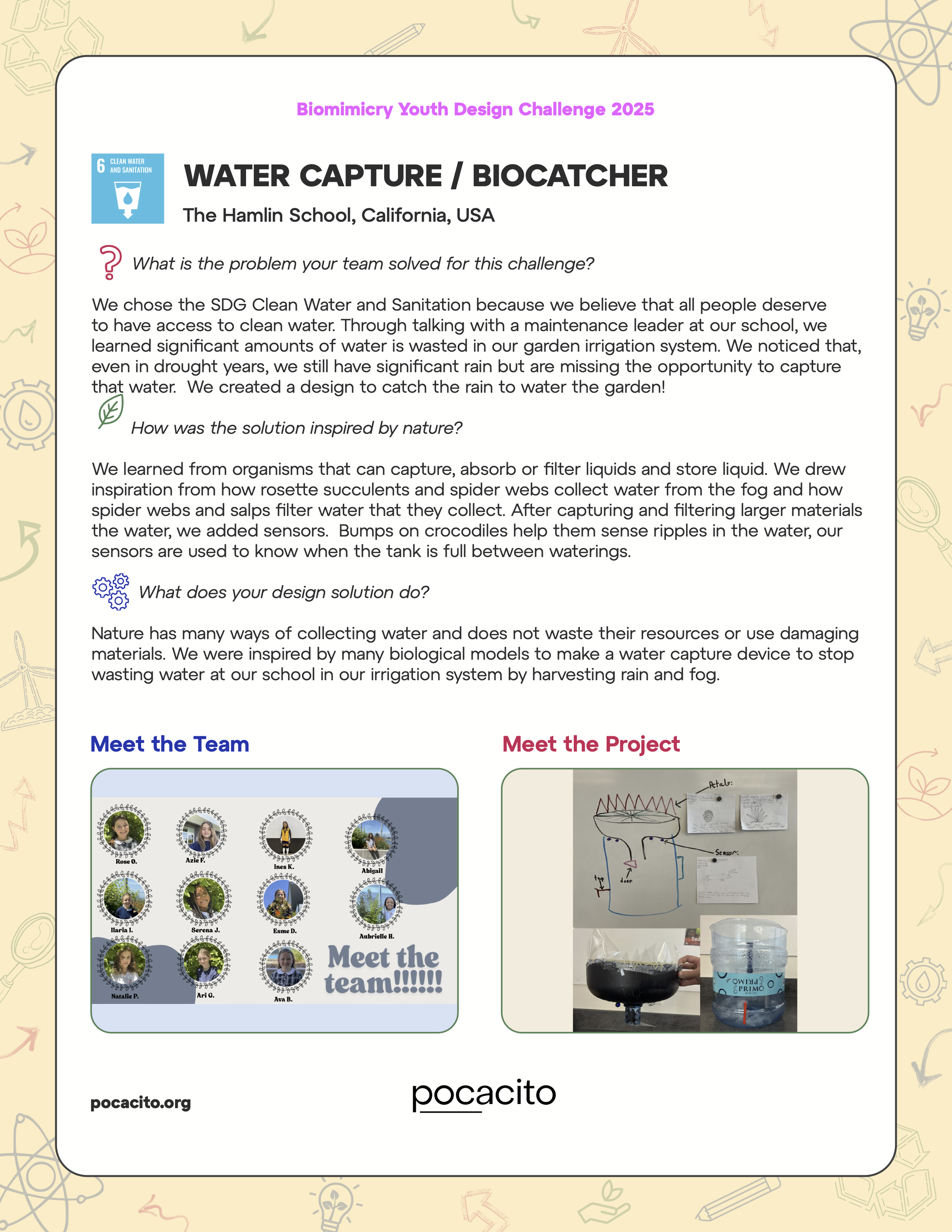
SDG 6 - Clean water and sanitation
The Hamlin School - California, USA, 4th grade, WATER CAPTURE / BIOCATCHER
SDG 13 - Climate action
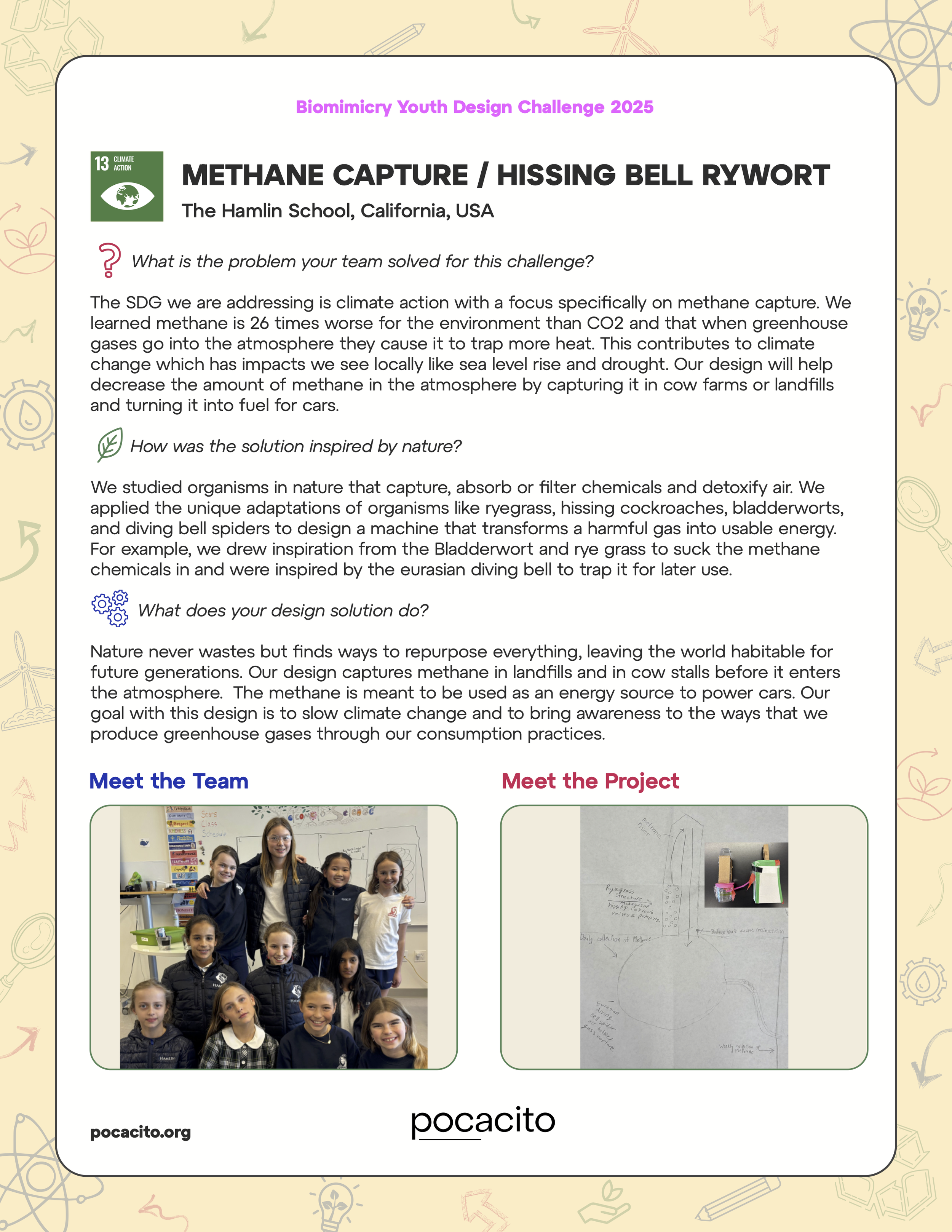
The Hamlin School - California, USA, 4th grade,Methane Capture / Hissing Bell Rywort
SDG 14 - Life below water
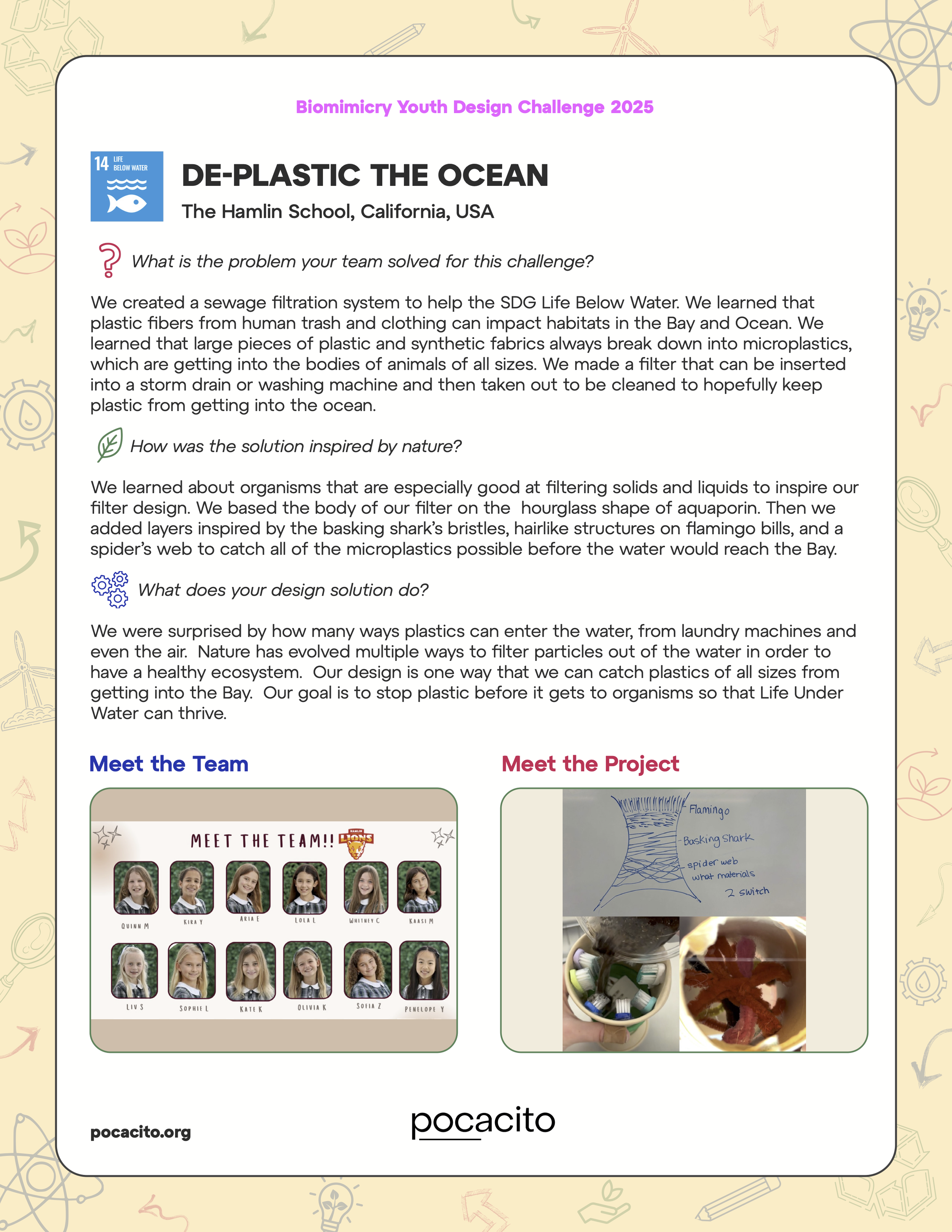
The Hamlin School - California, USA, 4th grade DE-PLASTIC THE OCEAN
Middle School
SDG 2 - Zero hunger
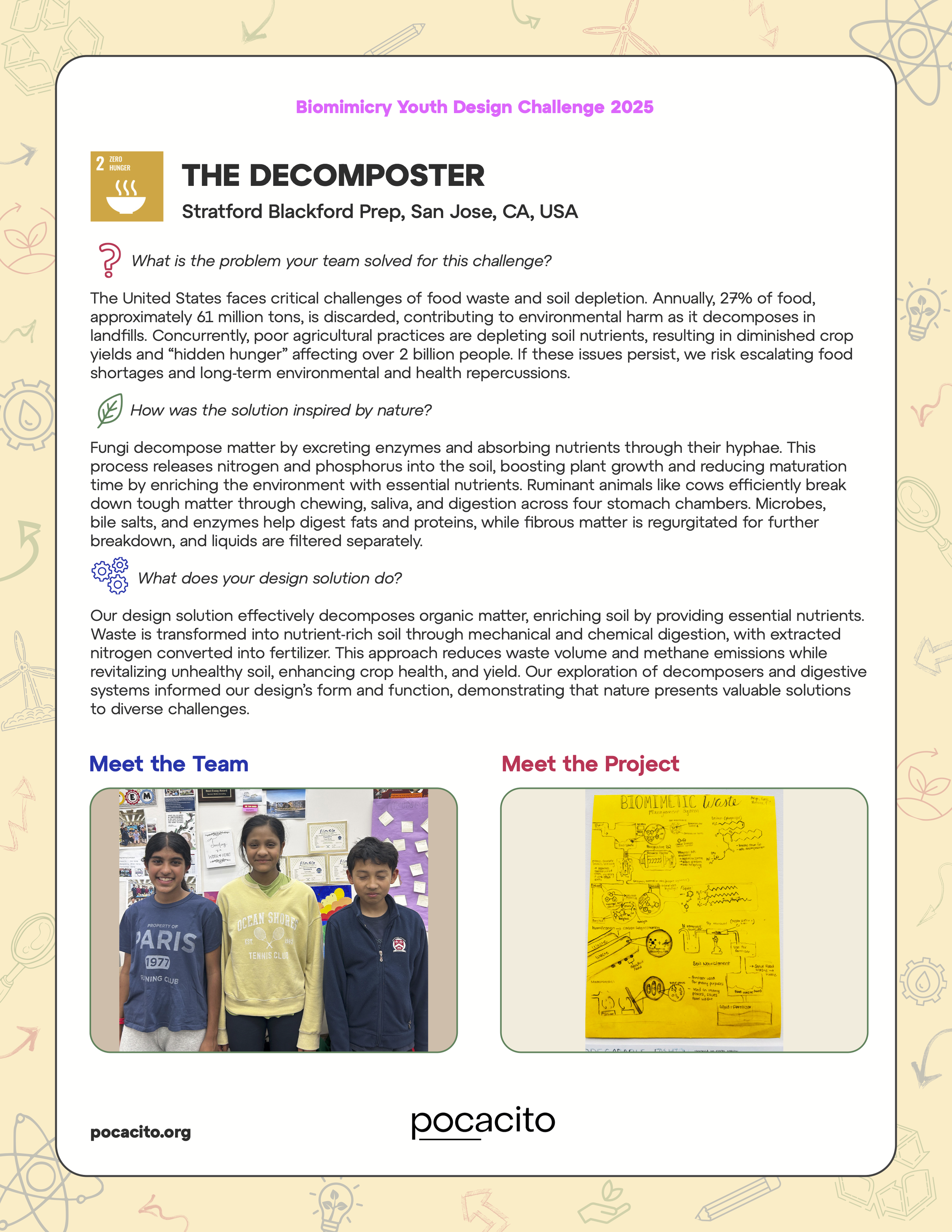
Stratford Blackford Prep, San Jose, CA, USA, Grade 7, THE DECOMPOSTER
SDG 3 - Good health and wellbeing
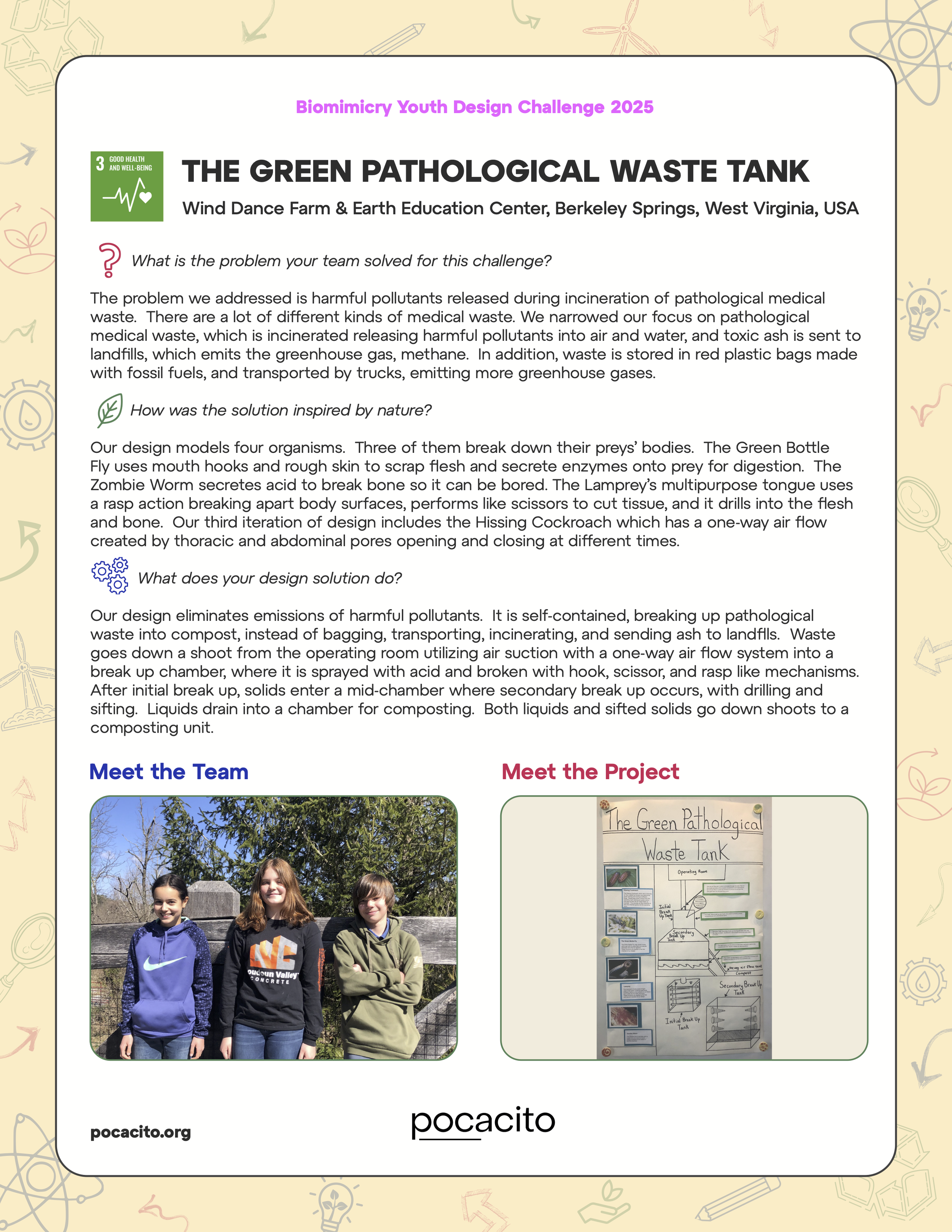
Wind Dance Farm & Earth Education Center, Berkeley Springs, West Virginia, USA, THE GREEN PATHOLOGICAL WASTE TANK
SDG 6 - Clean water and sanitation
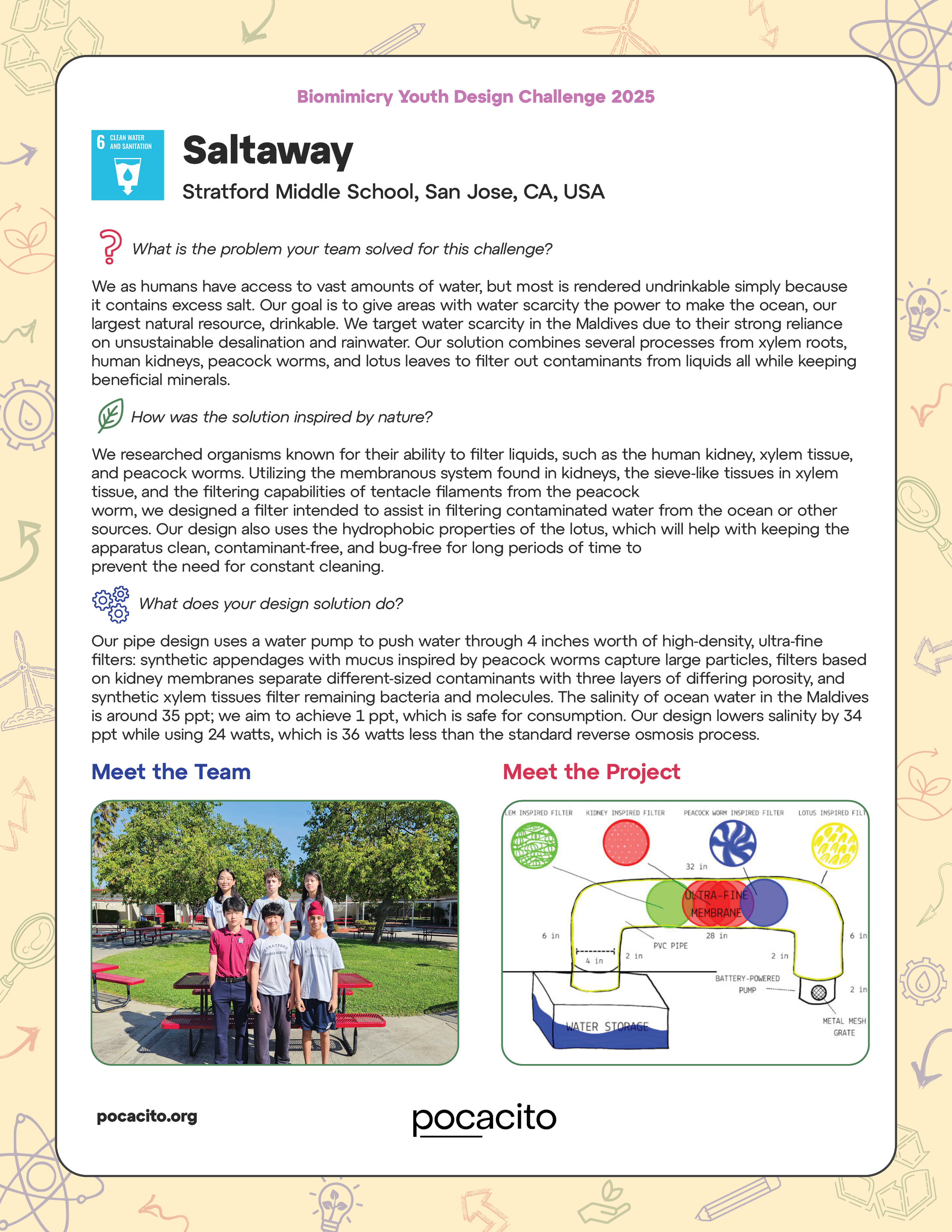
Stratford Middle School, San Jose, CA, USA, SALTAWAY
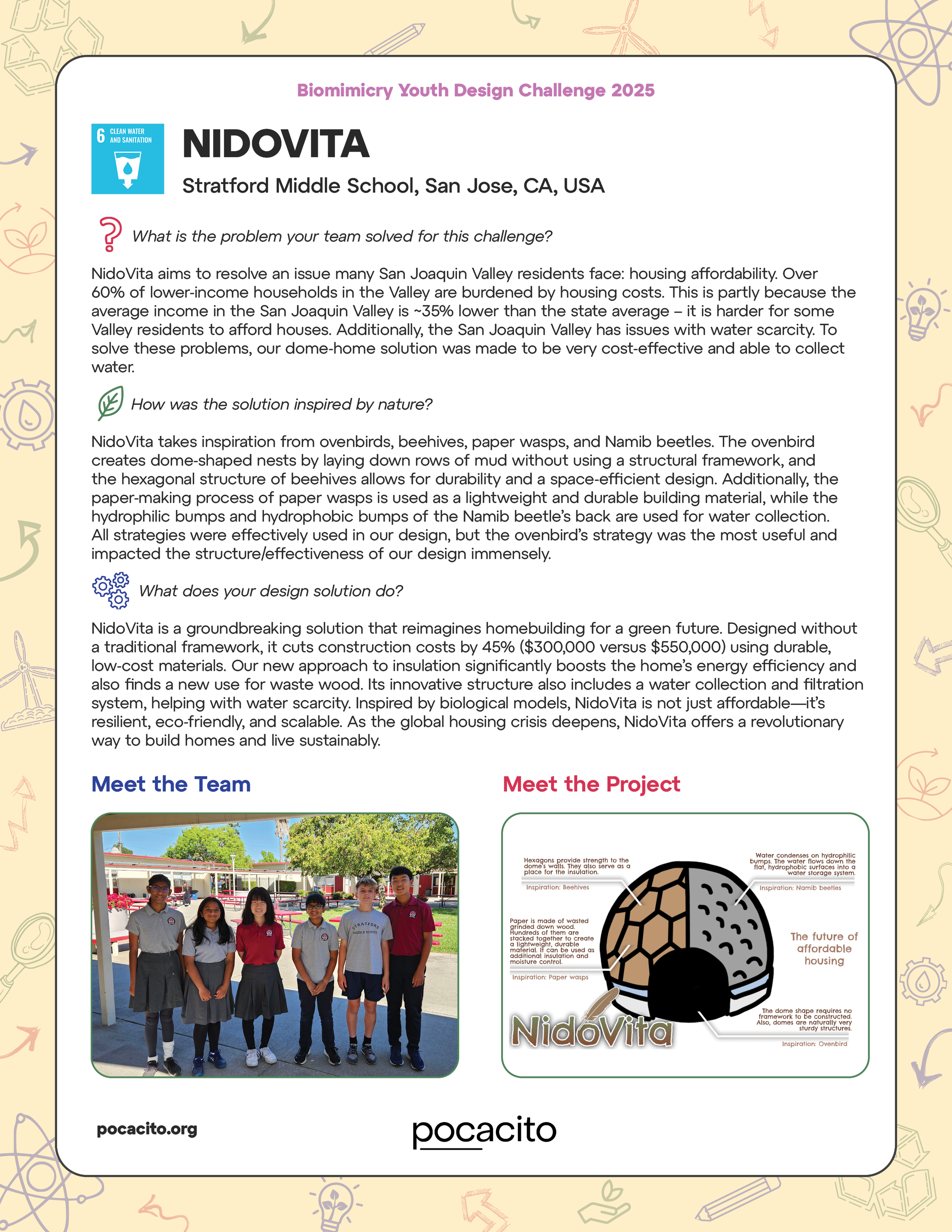
Stratford Middle School, San Jose, CA, USA, NIDOVITA
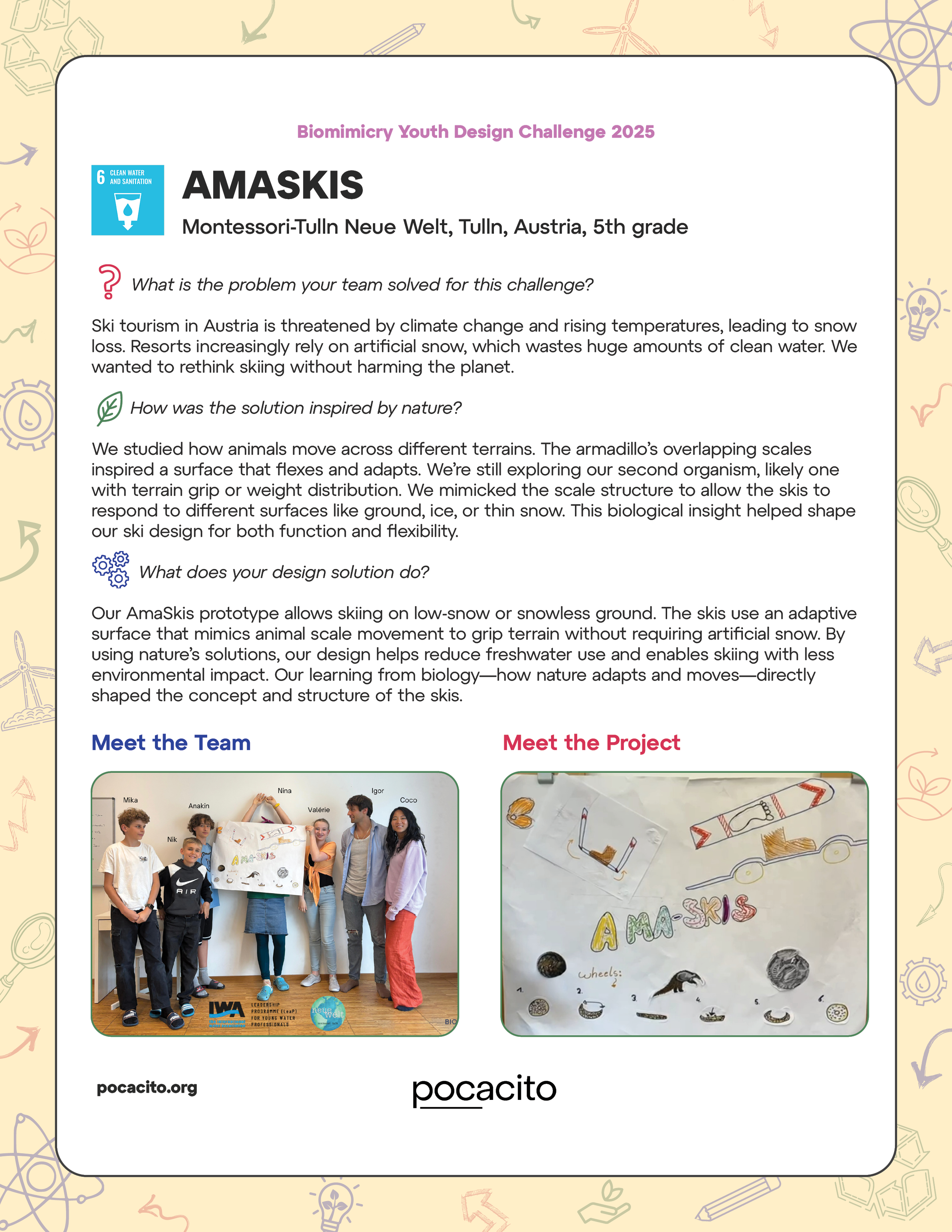
Montessori-Tulln Neue Welt,Tulln, Austria, 5th grade, AMASKIS
SDG 9 - Industry, innovation & infrastructure
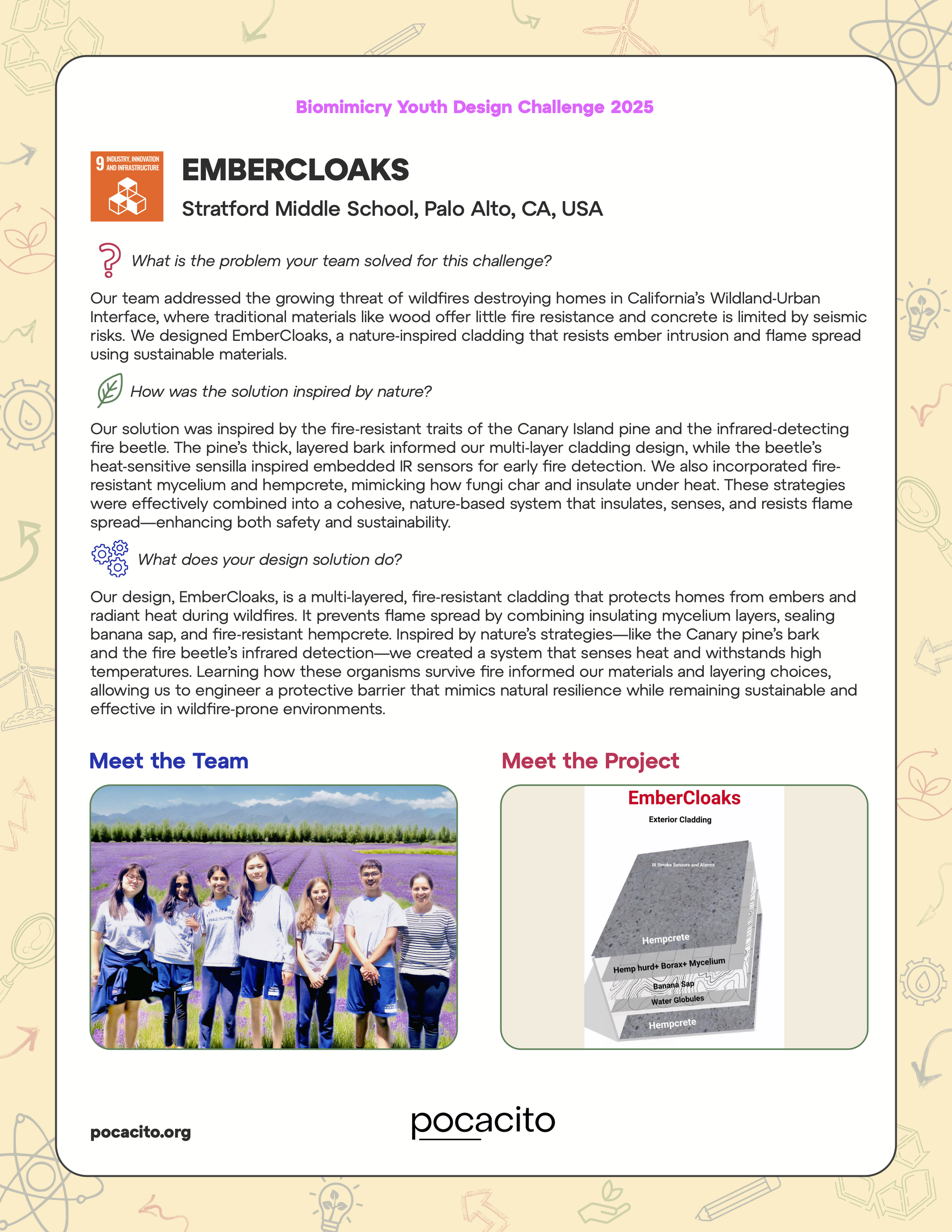
Stratford Middle School, Palo Alto, CA, USA, EMBERCLOAKS
SDG 12 - Responsible consumption & production
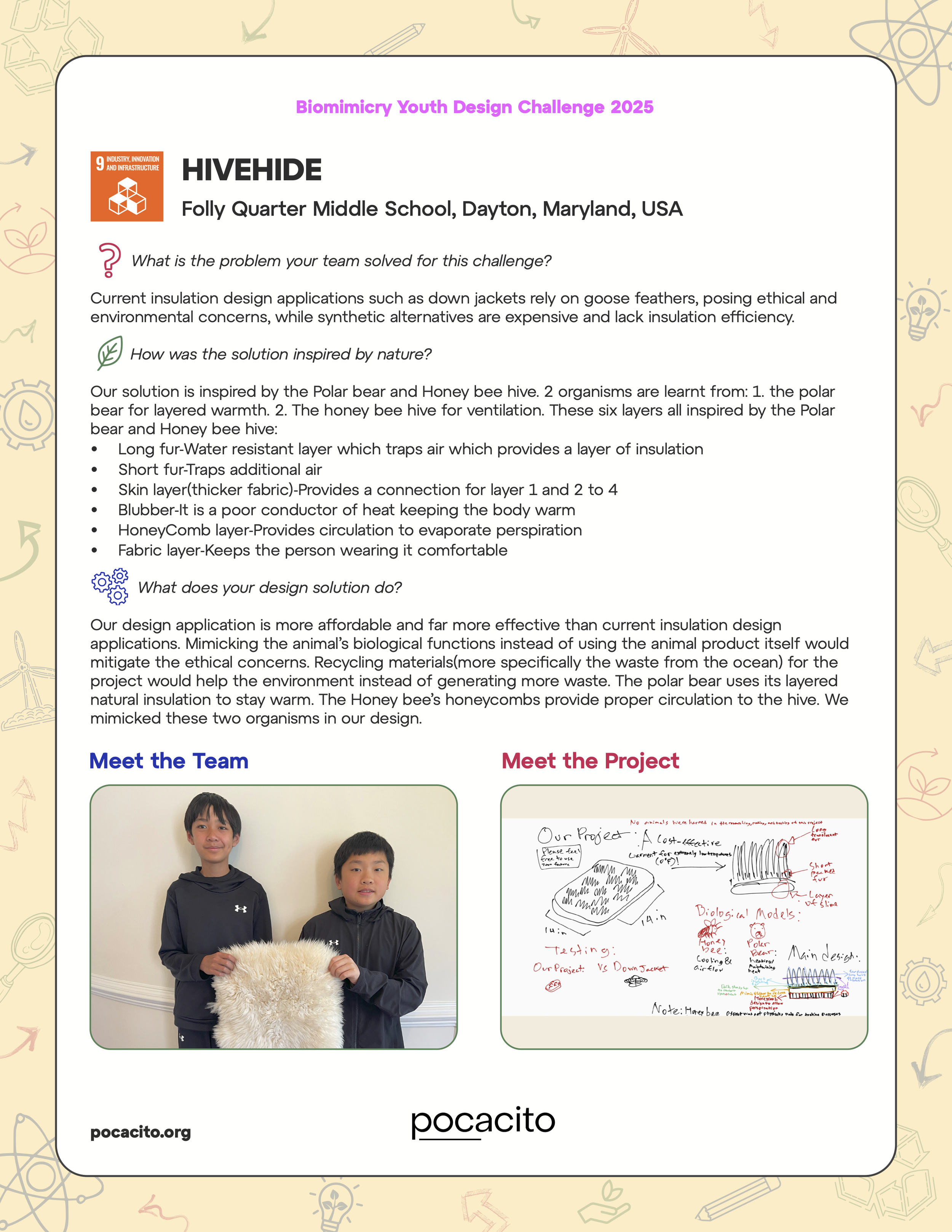
Folly Quarter Middle School, Dayton, Maryland, USA, HIVEHIDE
SDG 13 - Climate Action
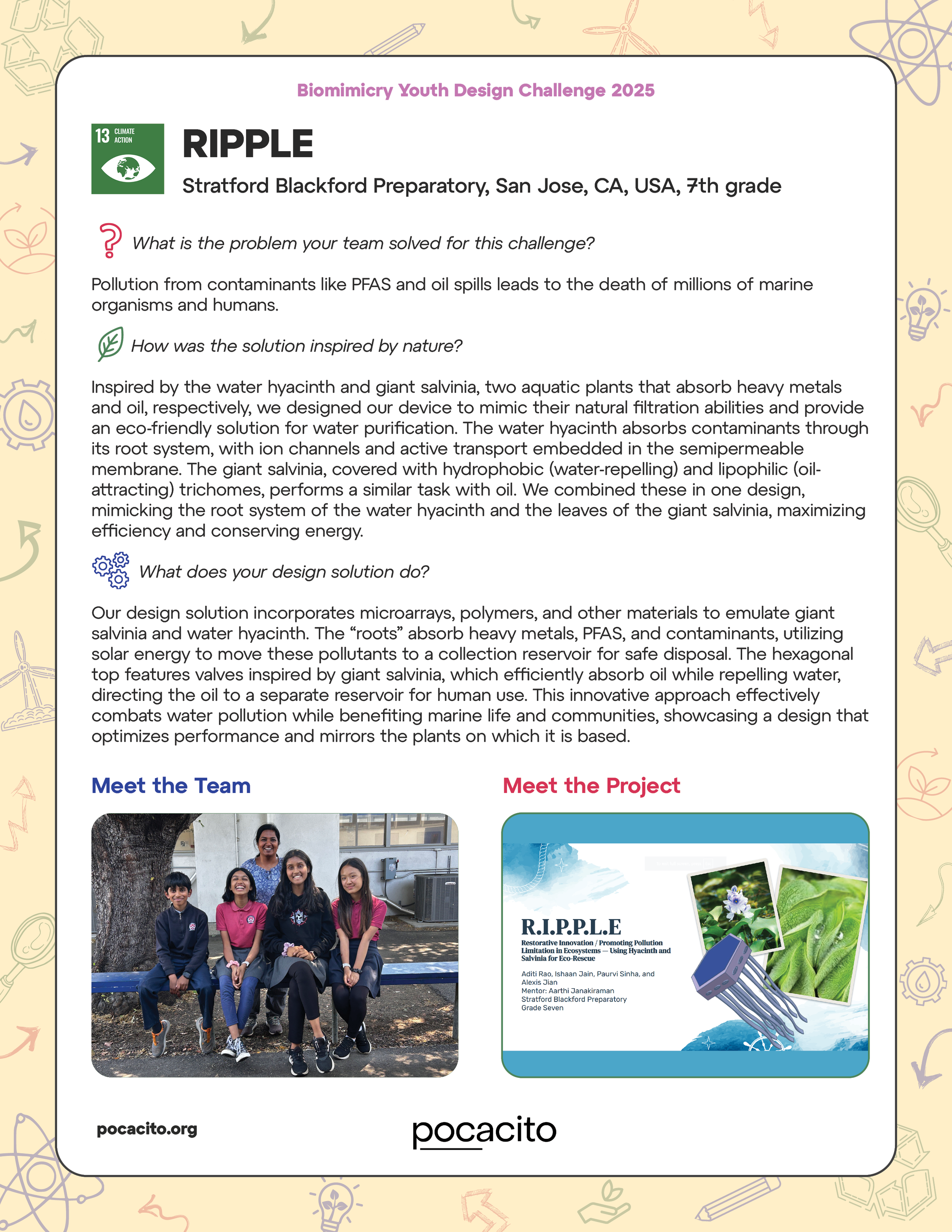
Stratford Blackford Preparatory, San Jose, CA, USA, 7th grade, RIPPLE
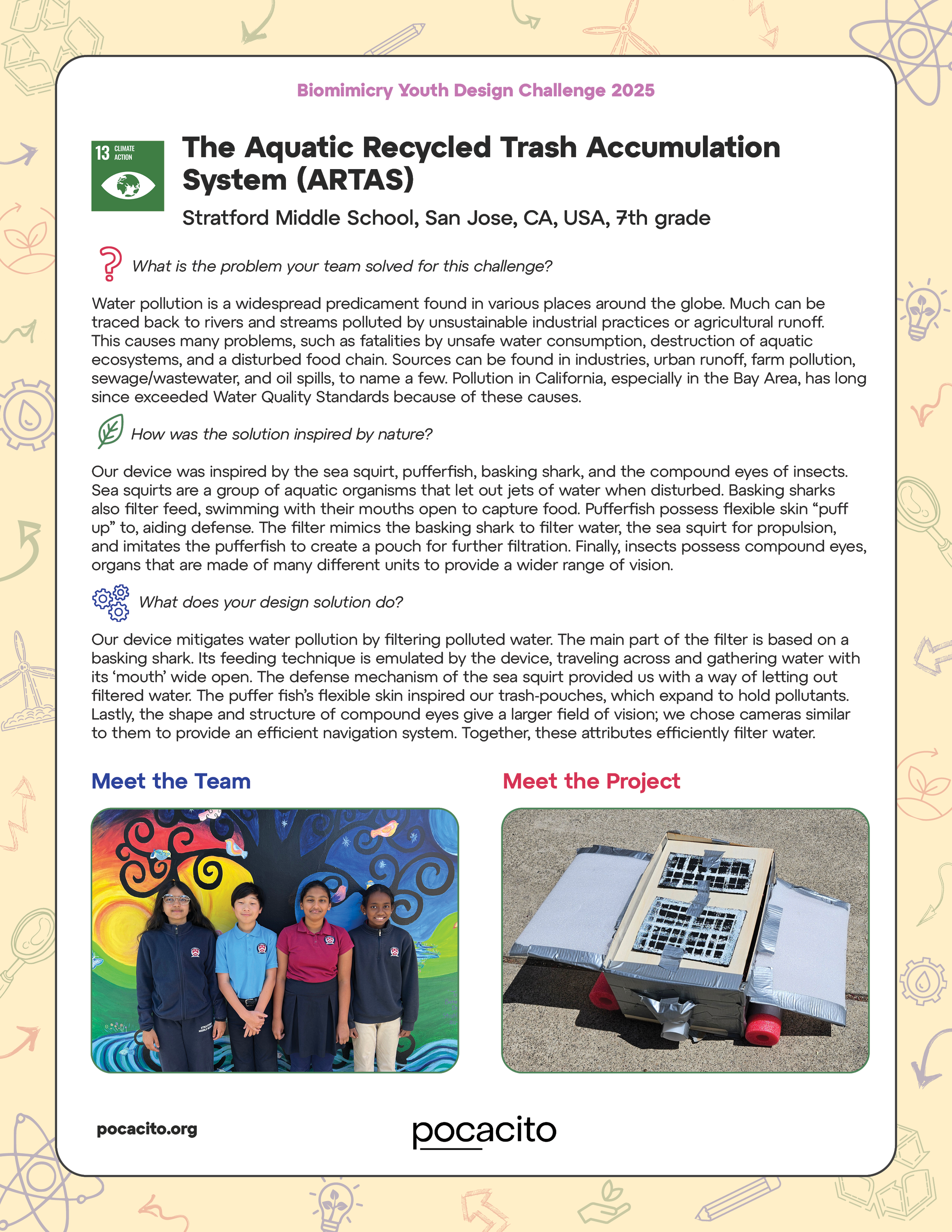
Stratford Middle School, San Jose, CA, USA, 7th grade, The Aquatic Recycled Trash Accumulation System (ARTAS)
SDG 14 - Life below water
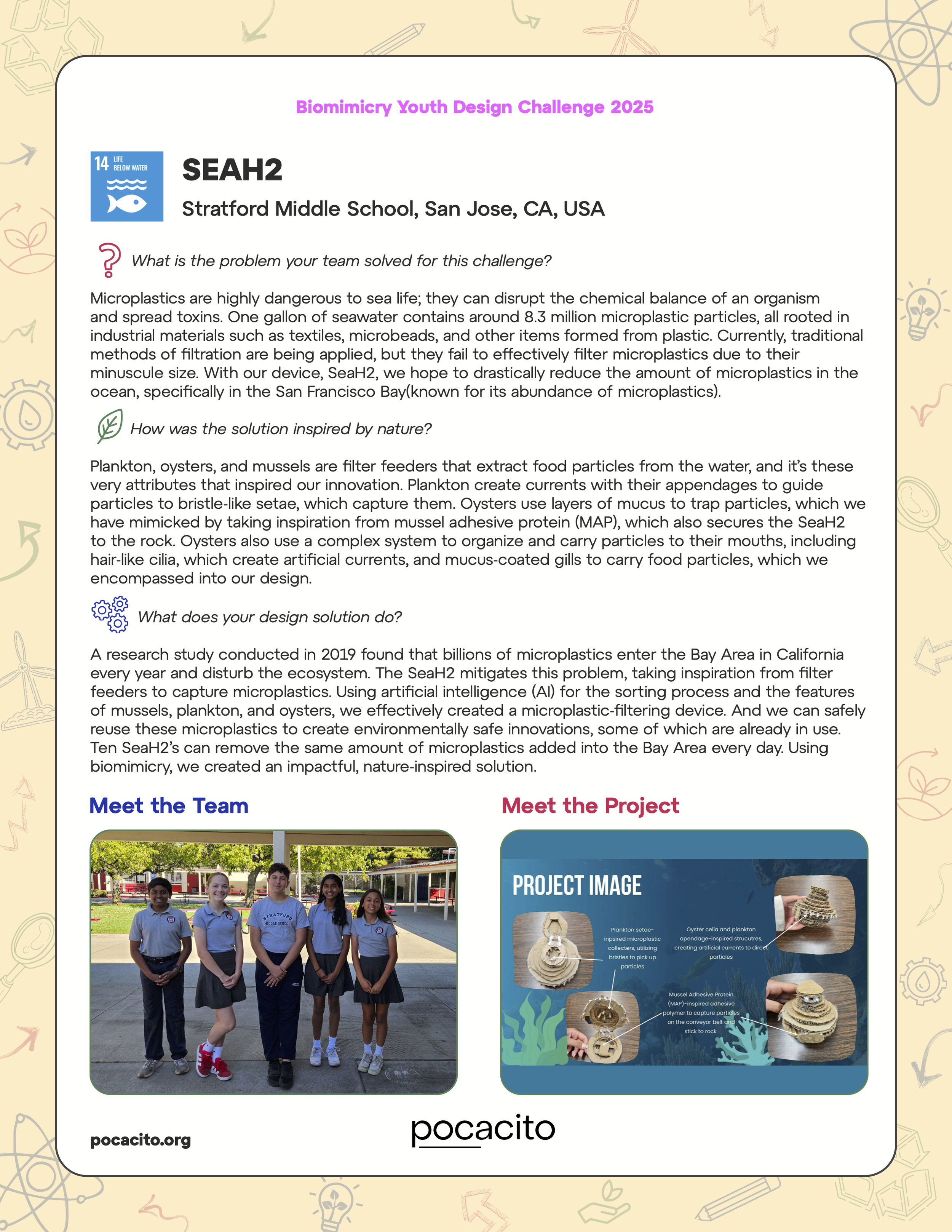
Stratford Middle School, San Jose, CA, USA, 7th grade, SEAH2
SDG 15 - Life on land
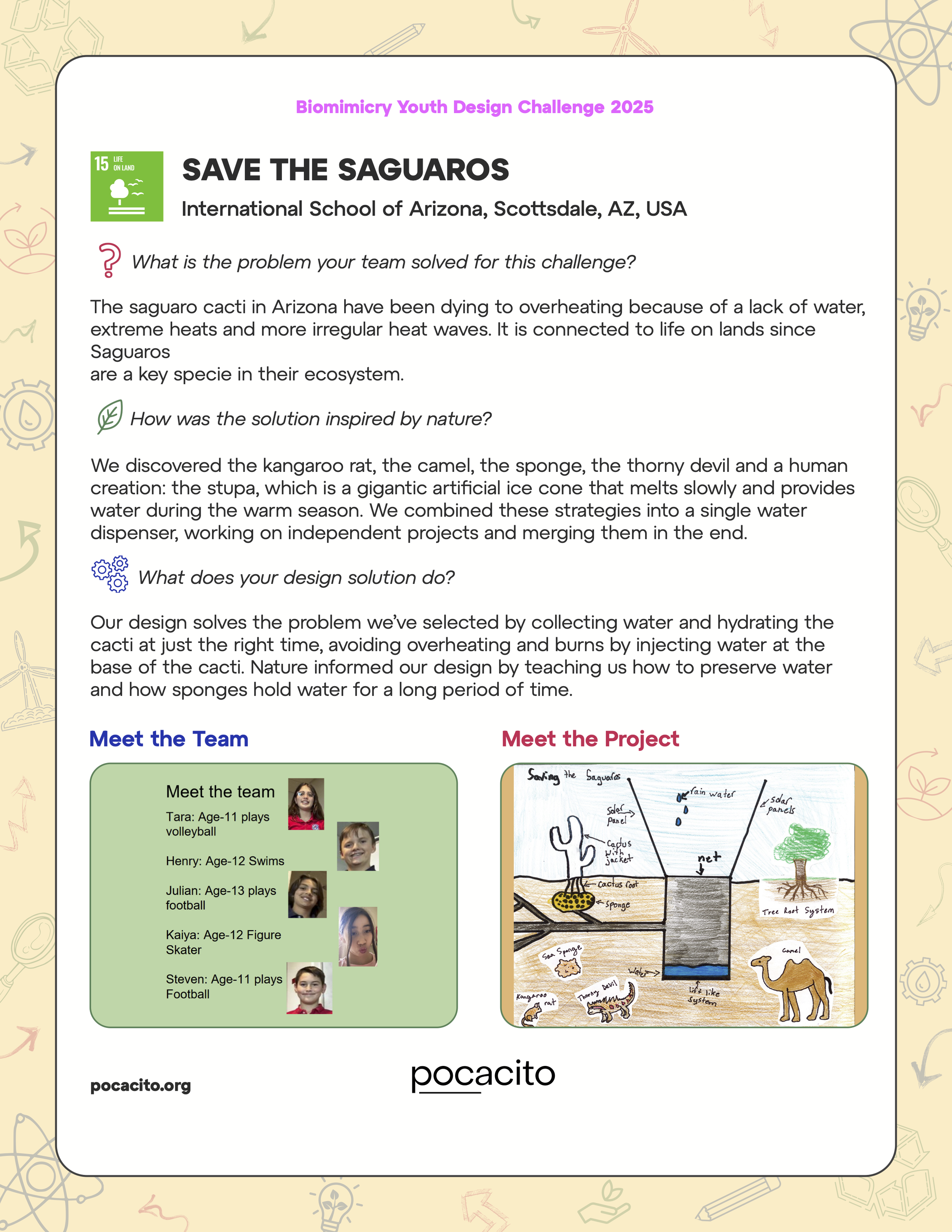
International School of Arizona, Scottsdale, AZ, USA, 6th-7th grade, SAVE THE SAGUAROS
High School
SDG 3 - Good health and wellbeing
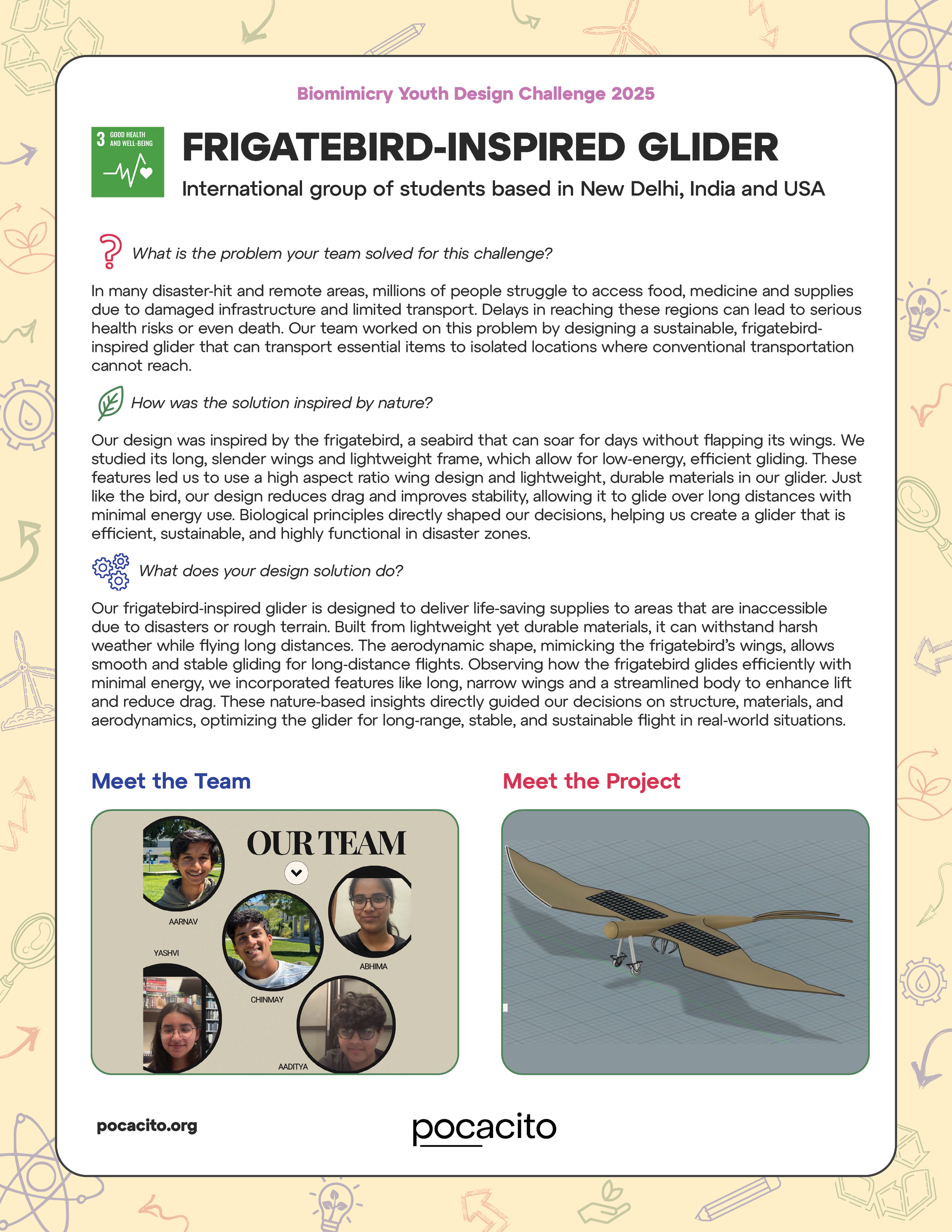
International group of students based in India and USA, New Delhi, India, FRIGATEBIRD-INSPIRED GLIDER
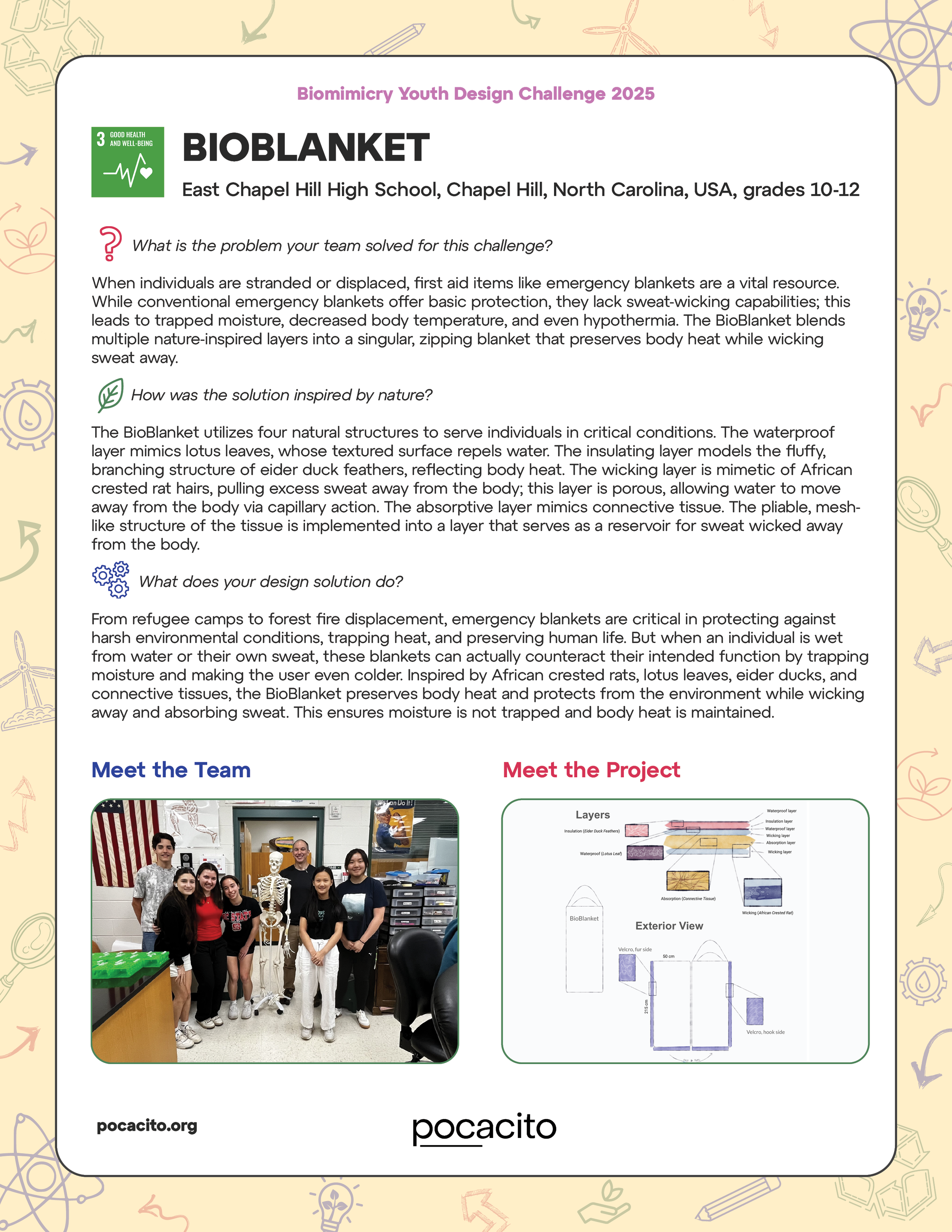
East Chapel Hill High School, Chapel Hill, North Carolina, USA, grades 10-12, BIOBLANKET
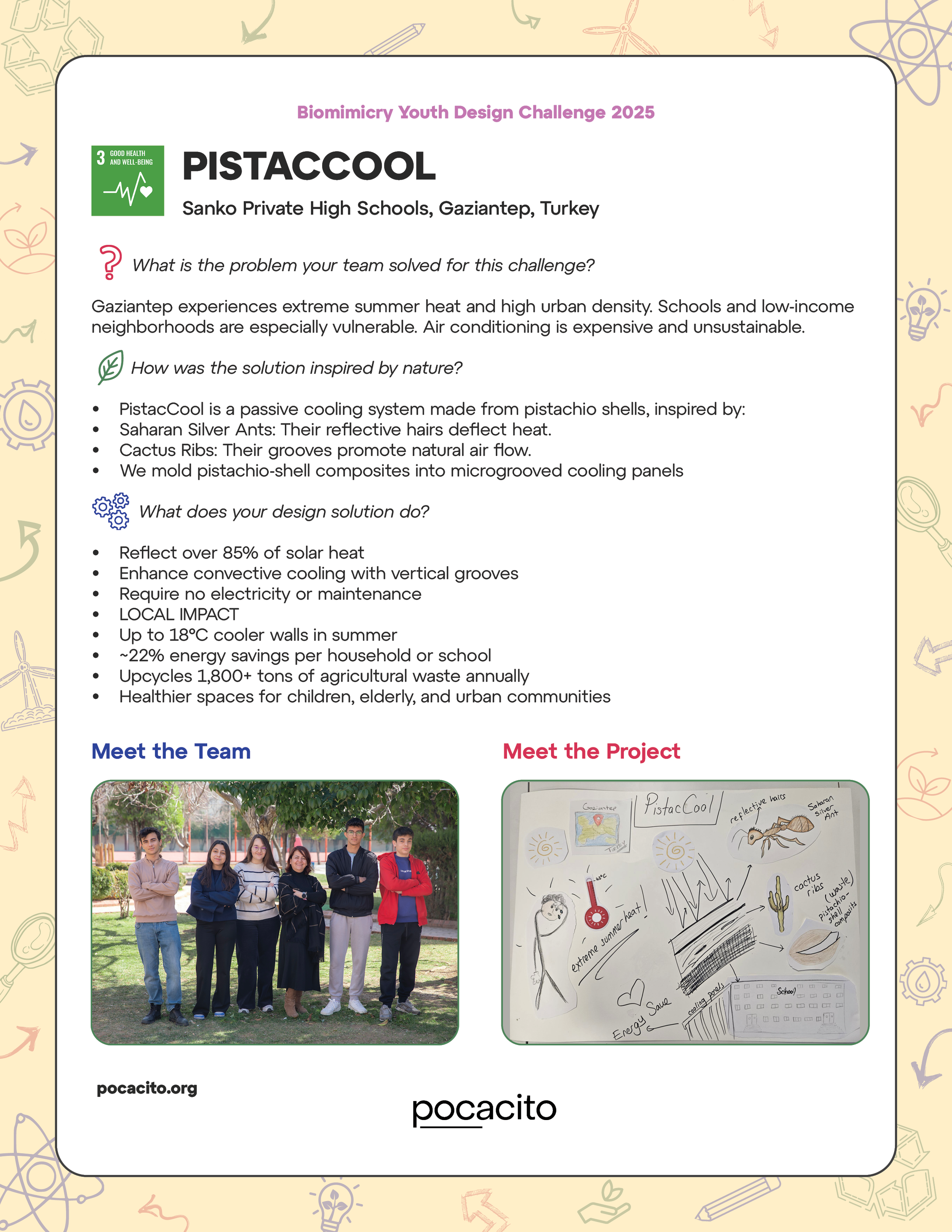
Sanko Private High Schools, Gaziantep, Turkey, PISTACCOOL
SDG 5 - Gender equality
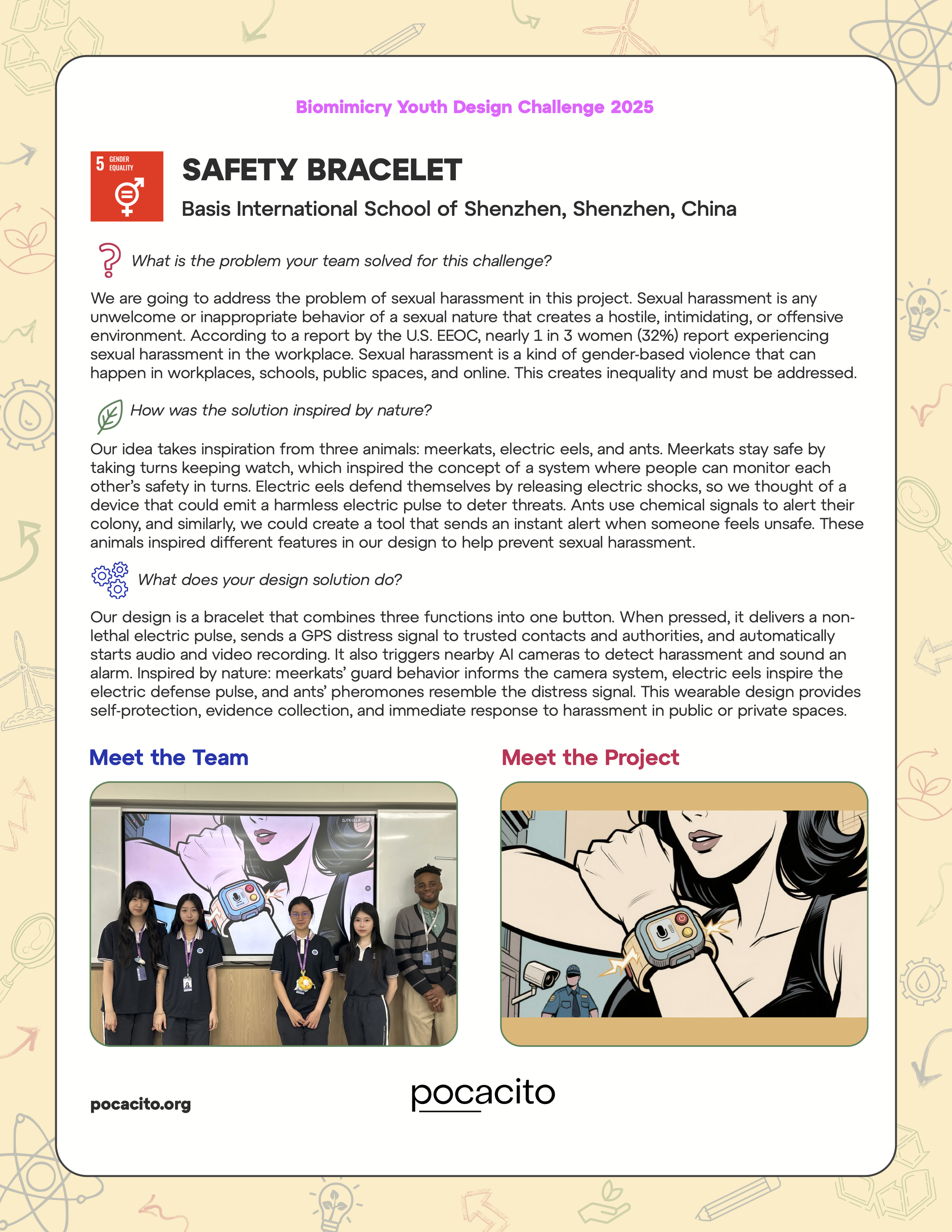
Basis International School of Shenzhen, Shenzhen, China, grade 12, SAFETY BRACELET
SDG 6 - Clean water and sanitation
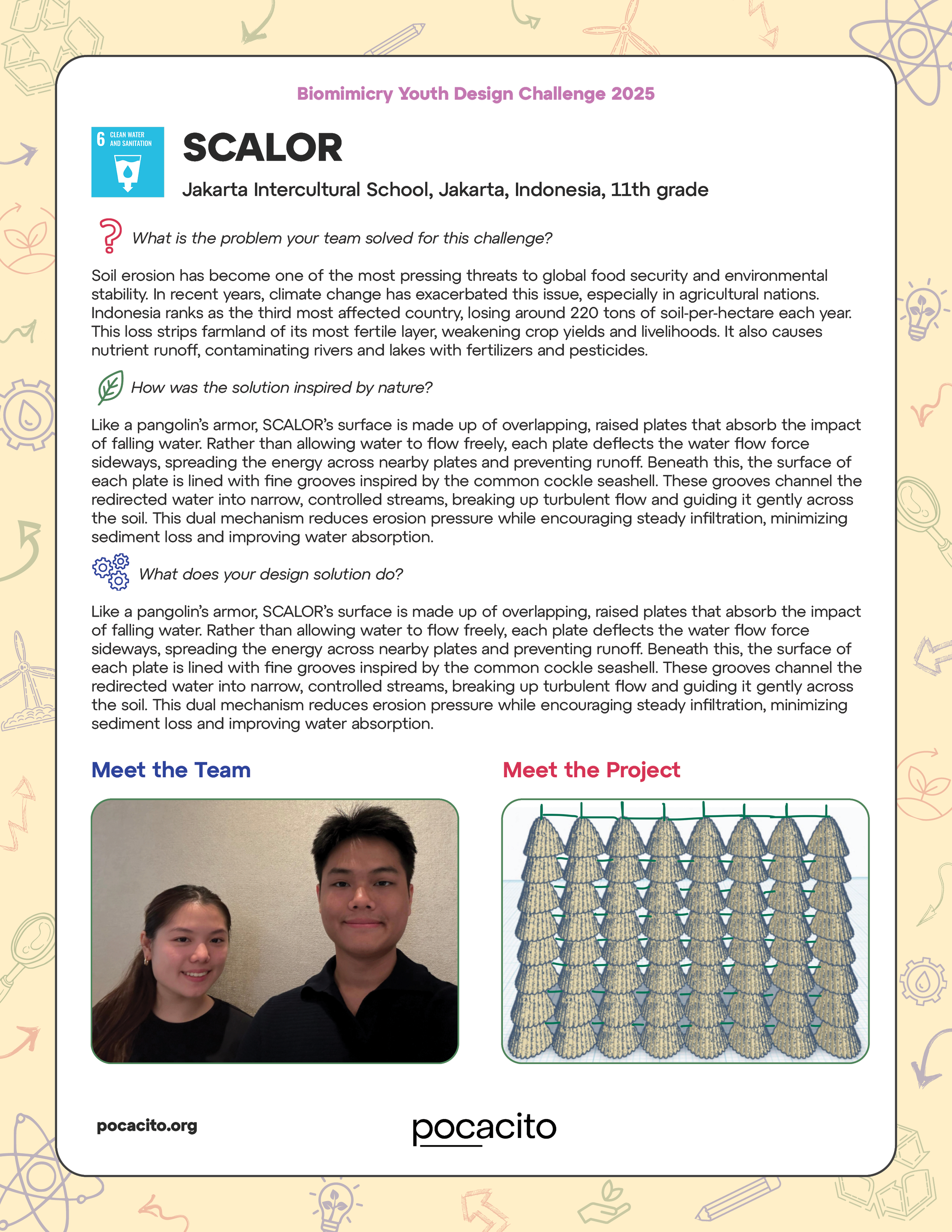
Jakarta Intercultural School, Jakarta, Indonesia, 11th grade, SCALOR
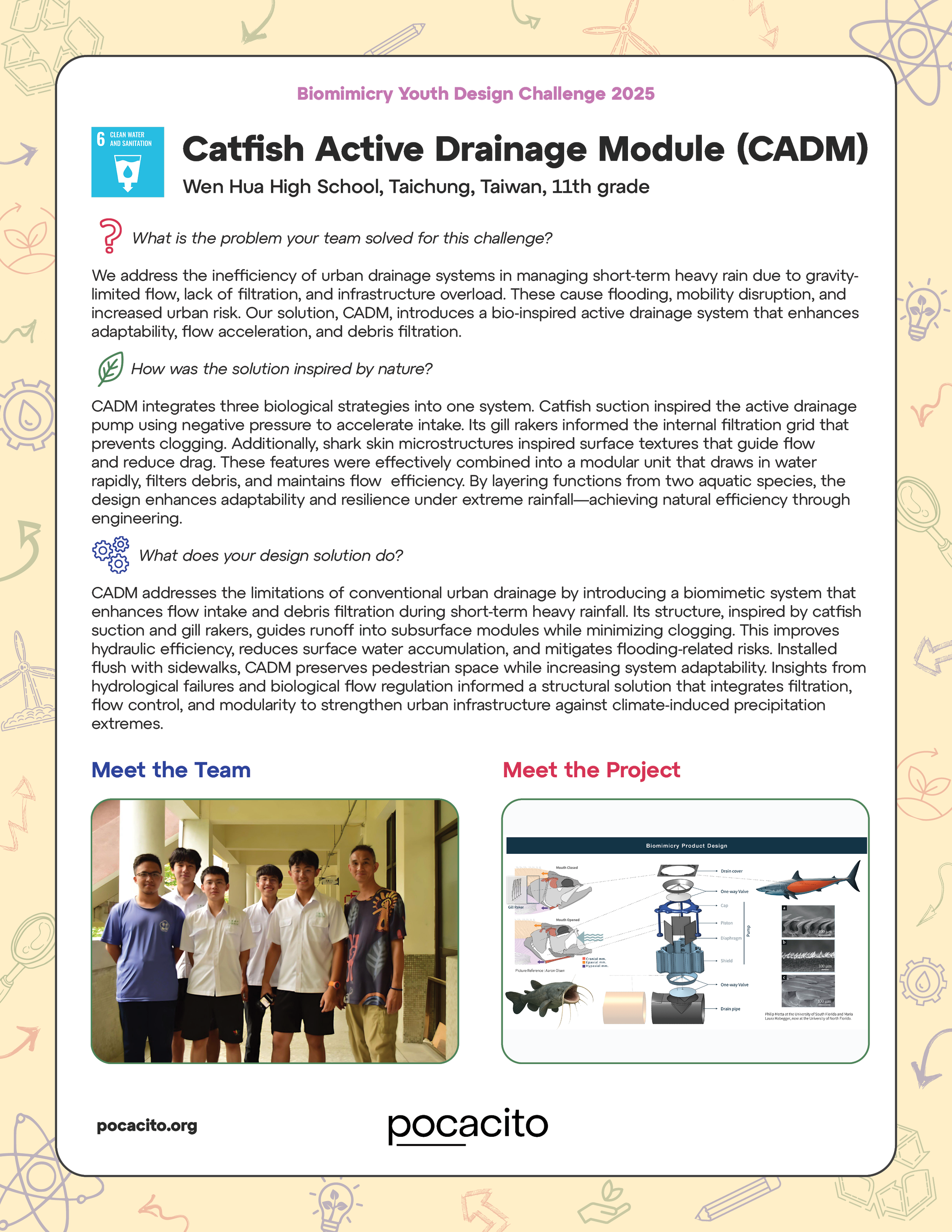
Wen Hua High School, Taichung, Taiwan, 11th grade, Catfish Active Drainage Module (CADM)
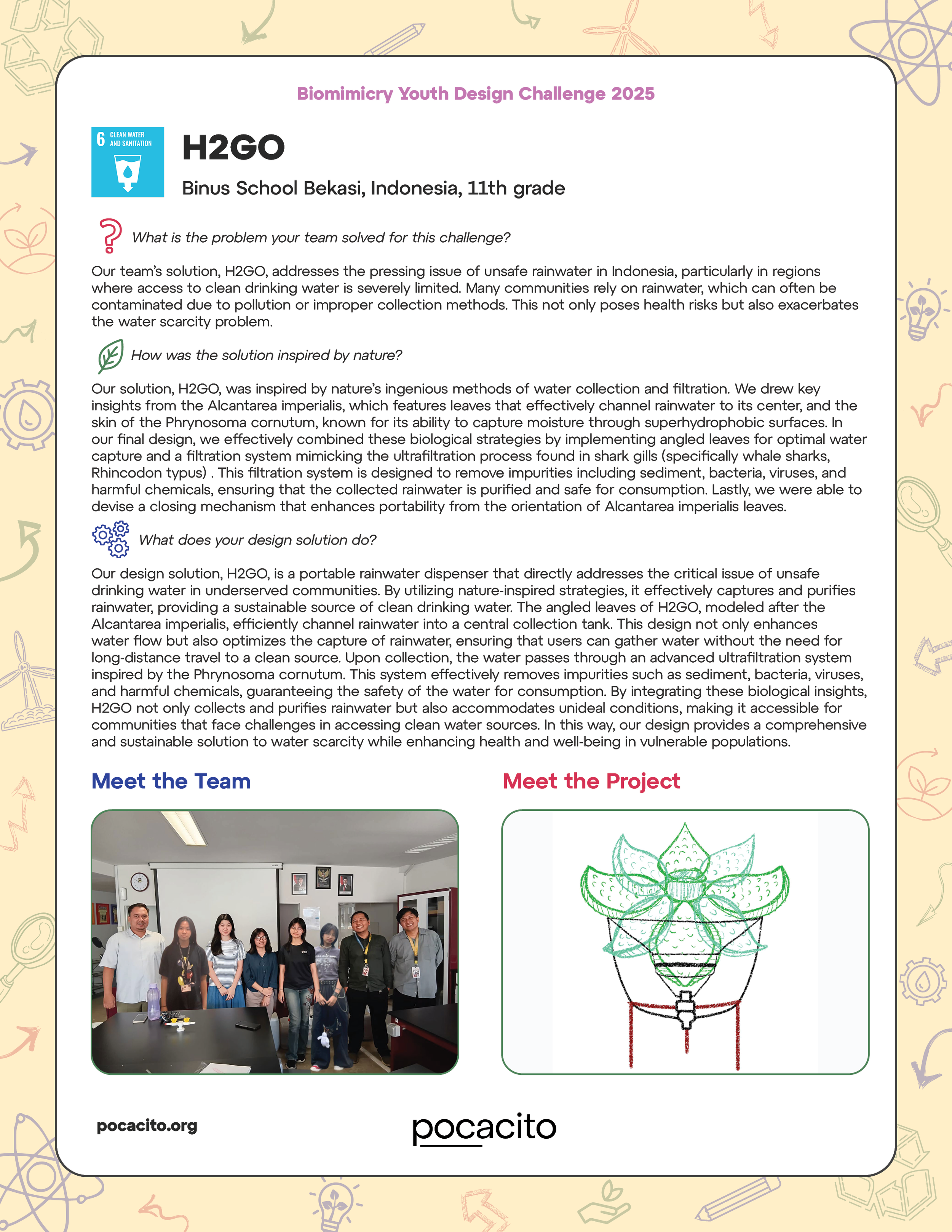
Binus School Bekasi, Indonesia, 11th grade, H2GO
SDG 7 - Affordable and clean energy
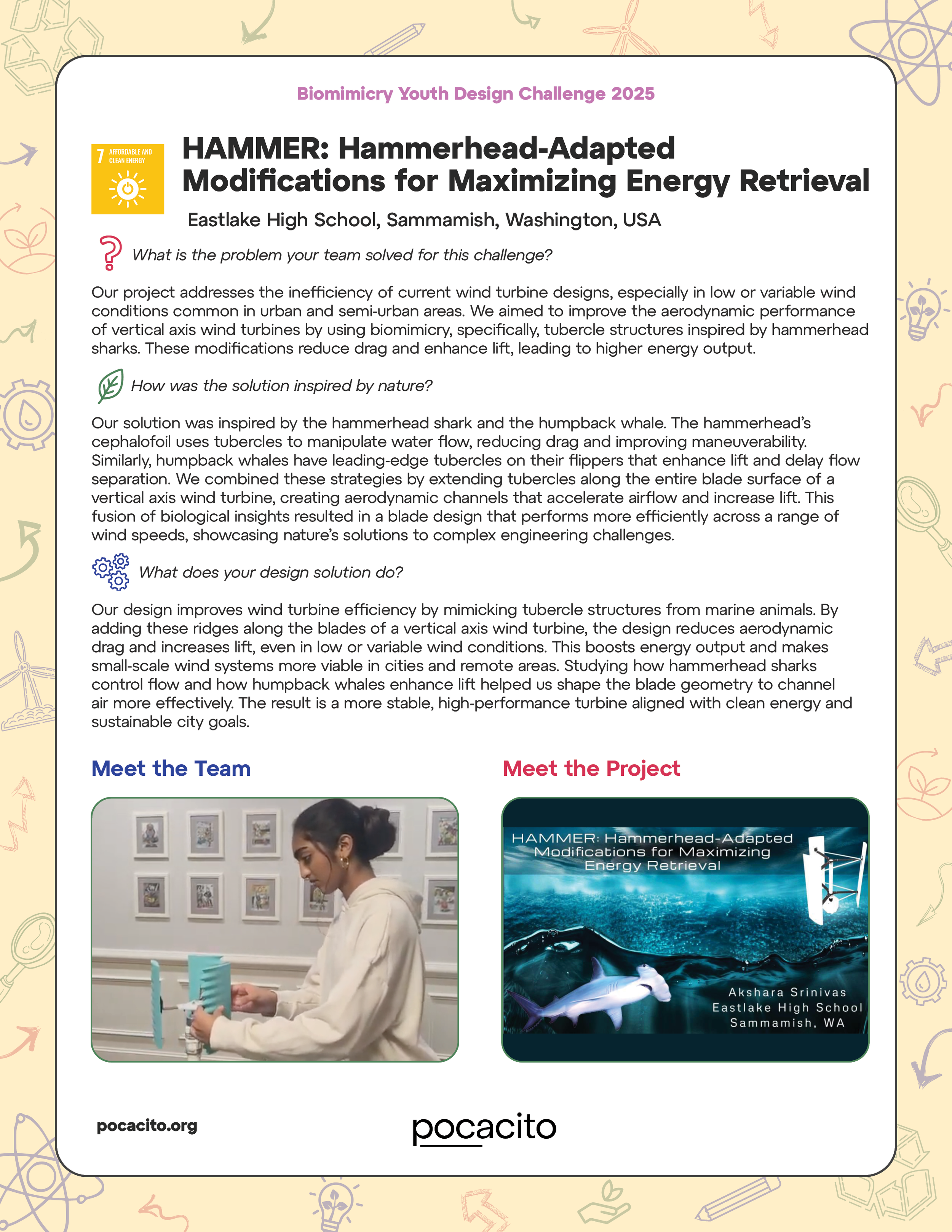
Eastlake High School, Sammamish, Washington, USA, HAMMER: Hammerhead-Adapted Modifications for Maximizing Energy Retrieval
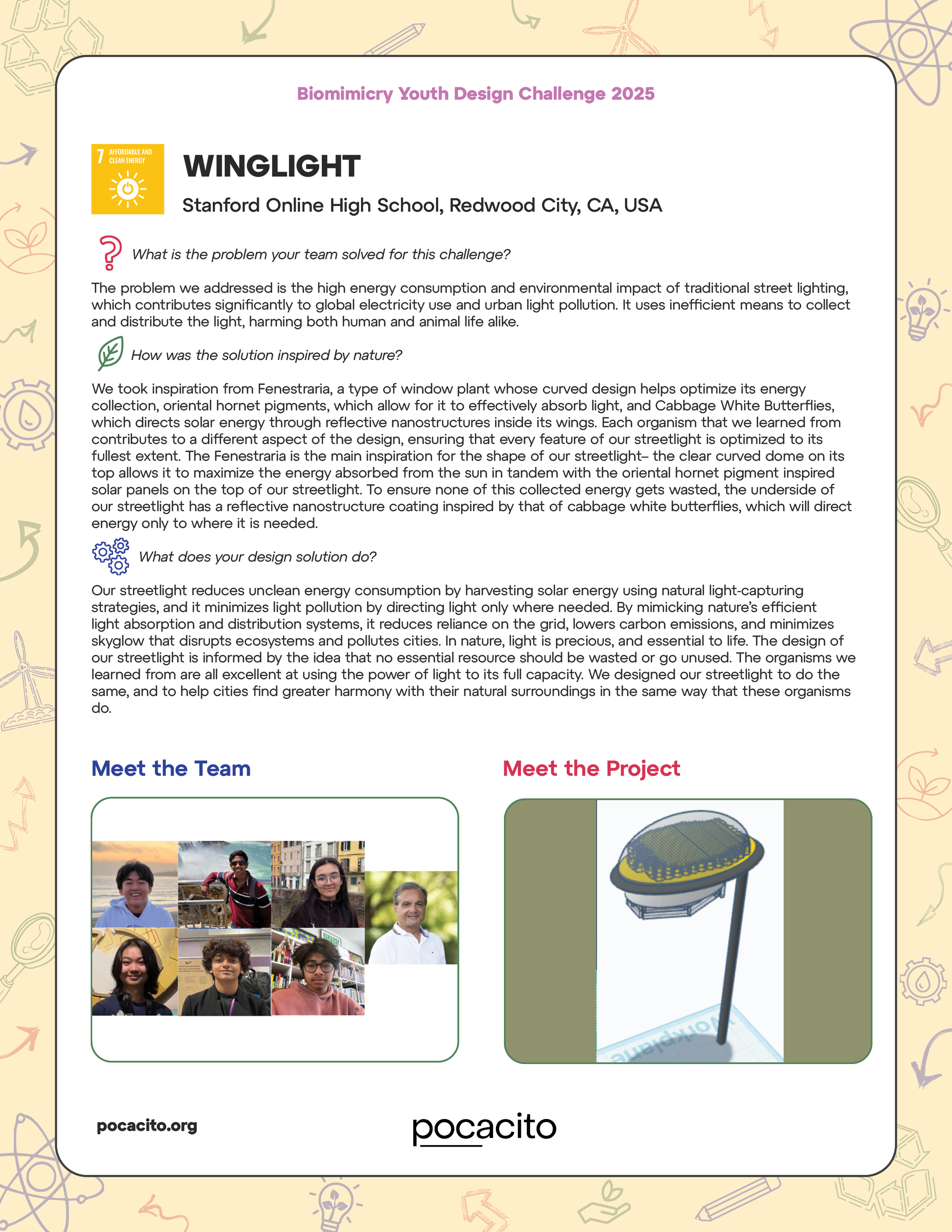
Stanford Online High School, Redwood City, CA, USA, WINGLIGHT
CS Academy International, Coimbatore, India
SDG 9 - Industry, innovation and infrastructure
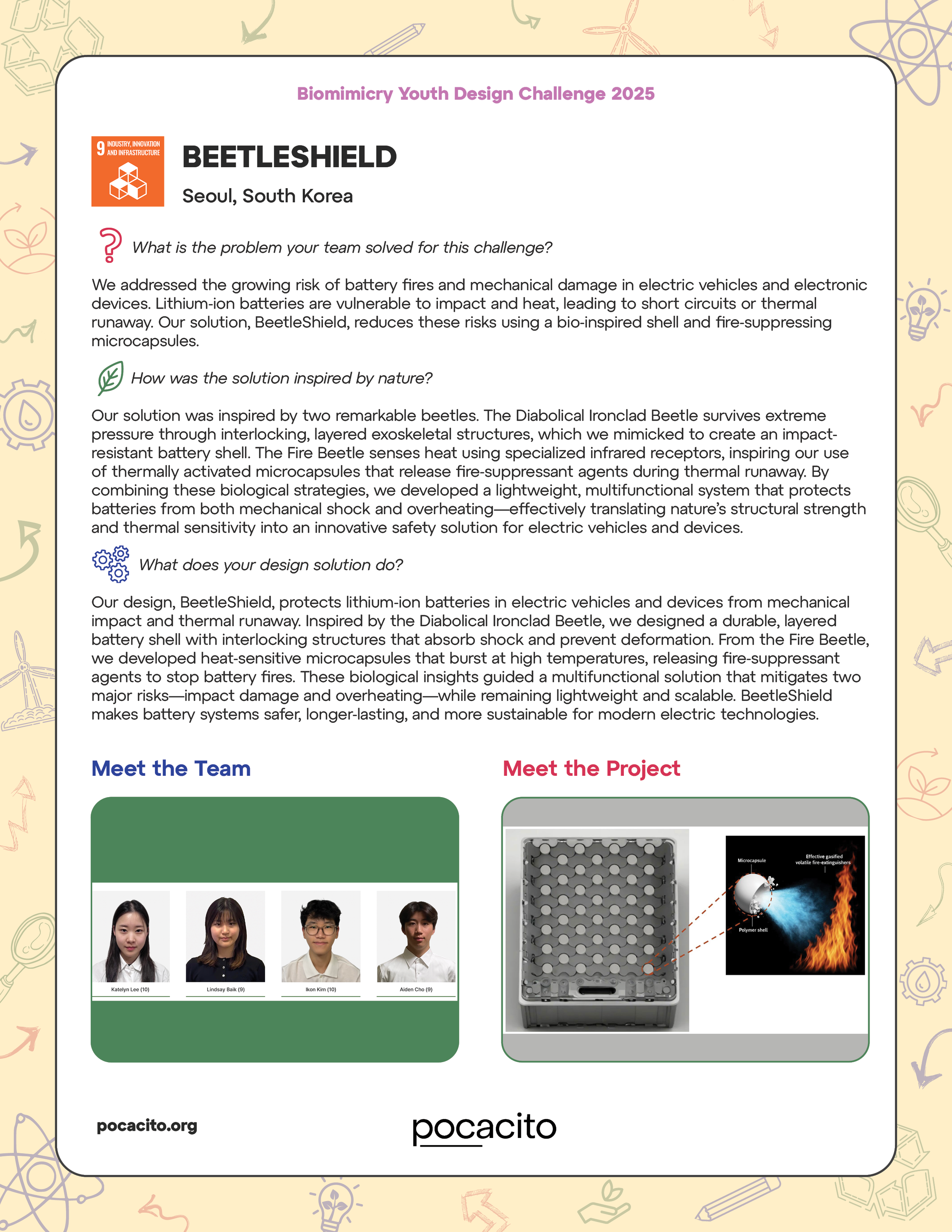
Seoul, South Korea, BEETLESHIELD
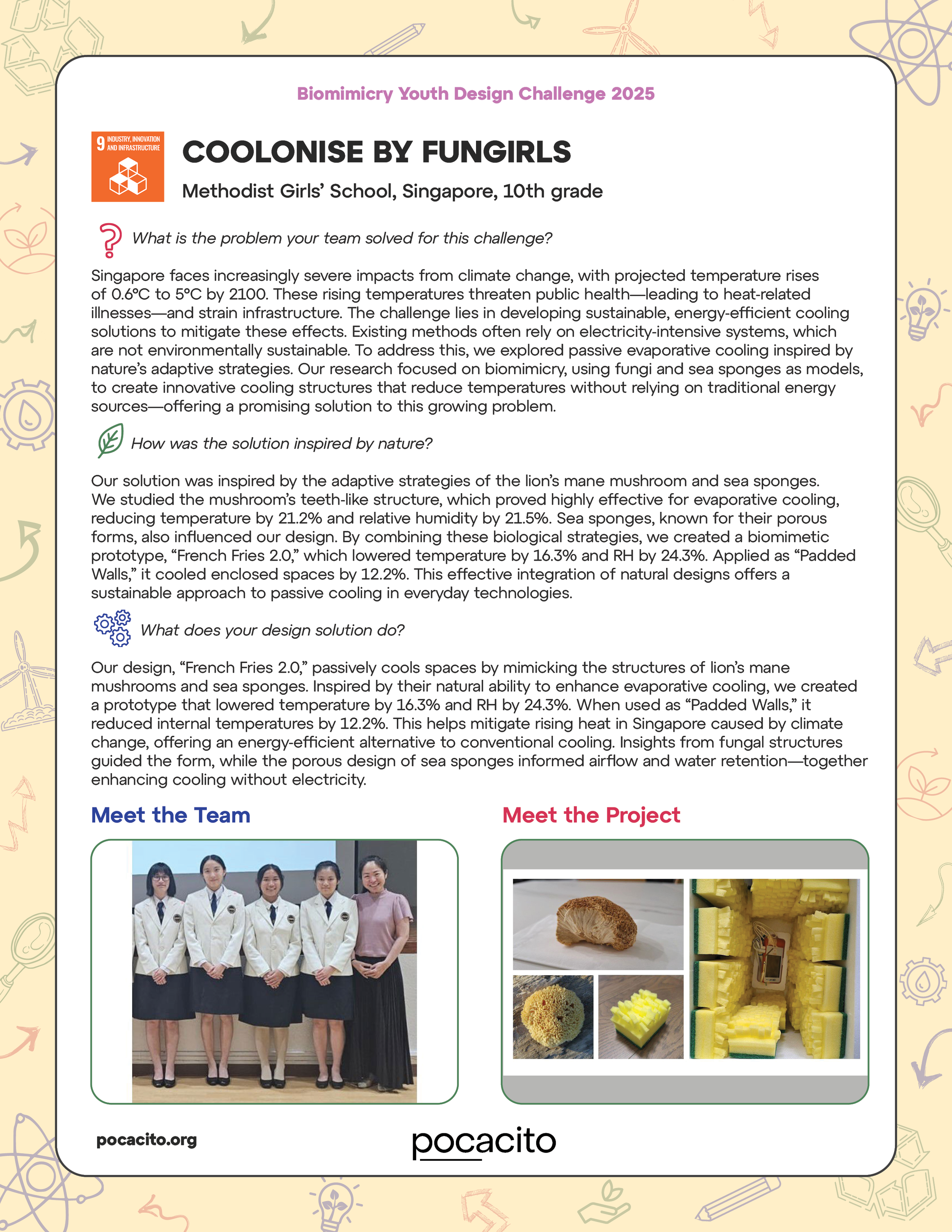
Methodist Girls’ School, Singapore, 10th grade, COOLONISE BY FUNGIRLS
Herricks High School, New Hyde Park, NY, USA, TERMITE ARCHITECTURE COOLING
SDG 11 - Sustainable cities and communities
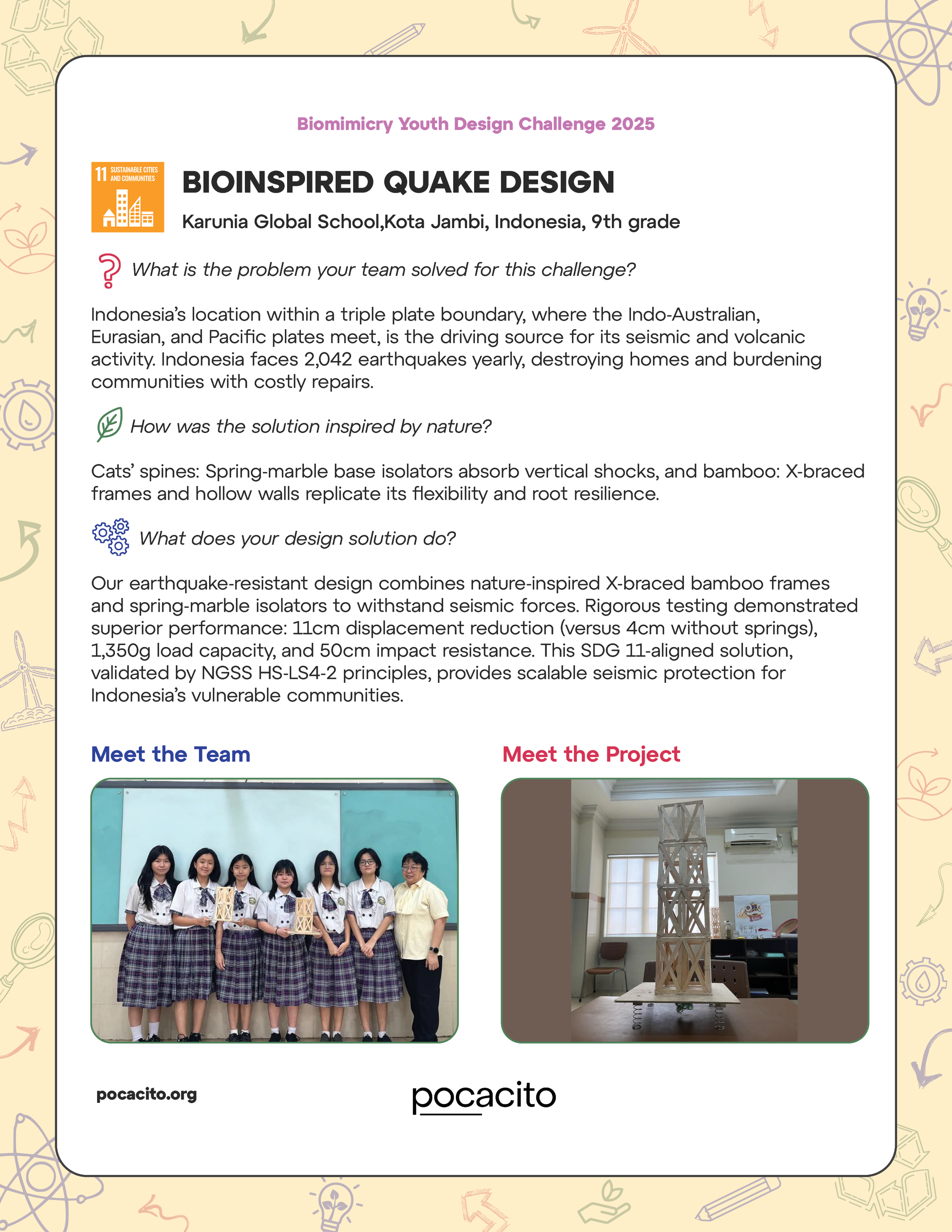
Karunia Global School,Kota Jambi, Indonesia, 9th grade, BIOINSPIRED QUAKE DESIGN
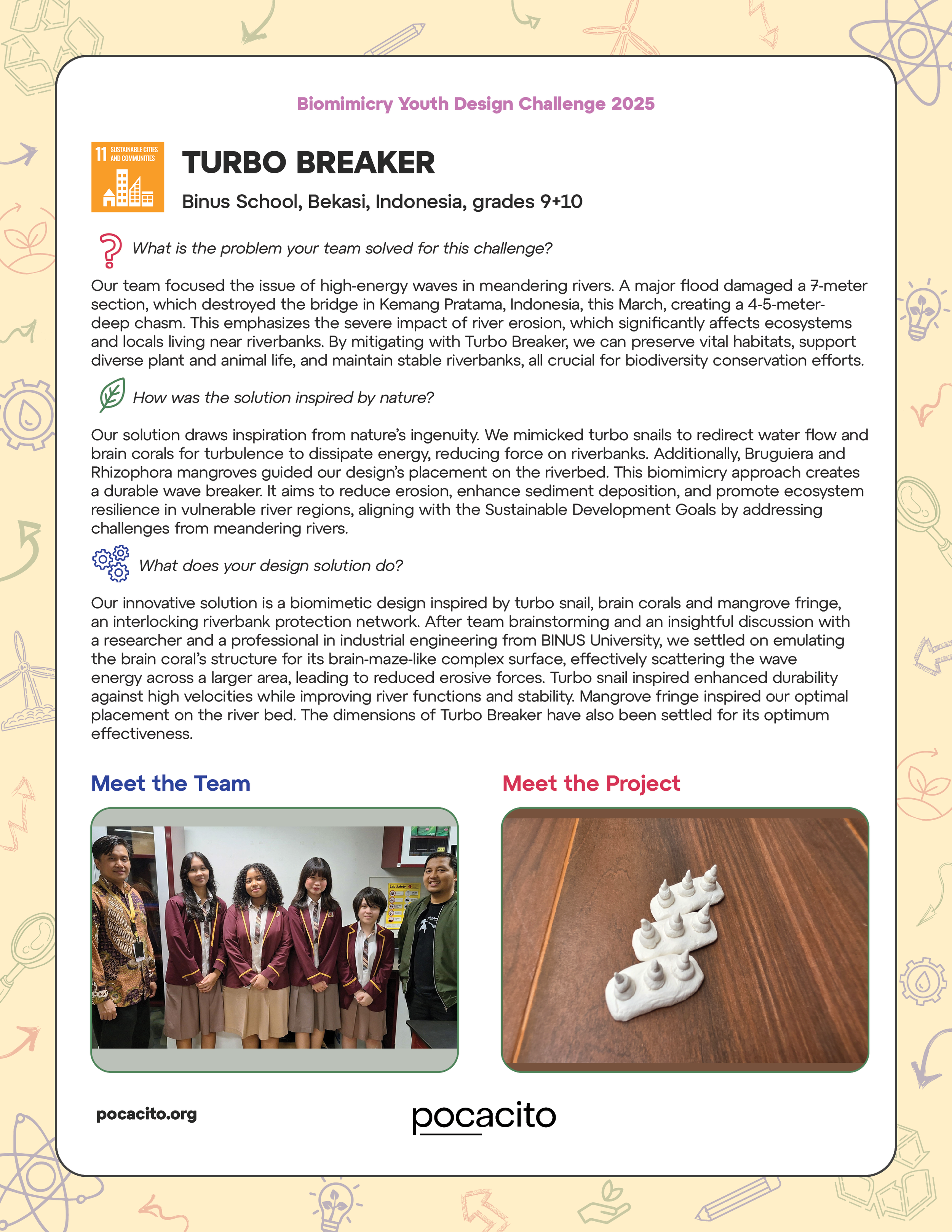
Binus School, Bekasi, Indonesia, grades 9+10, TURBO BREAKER
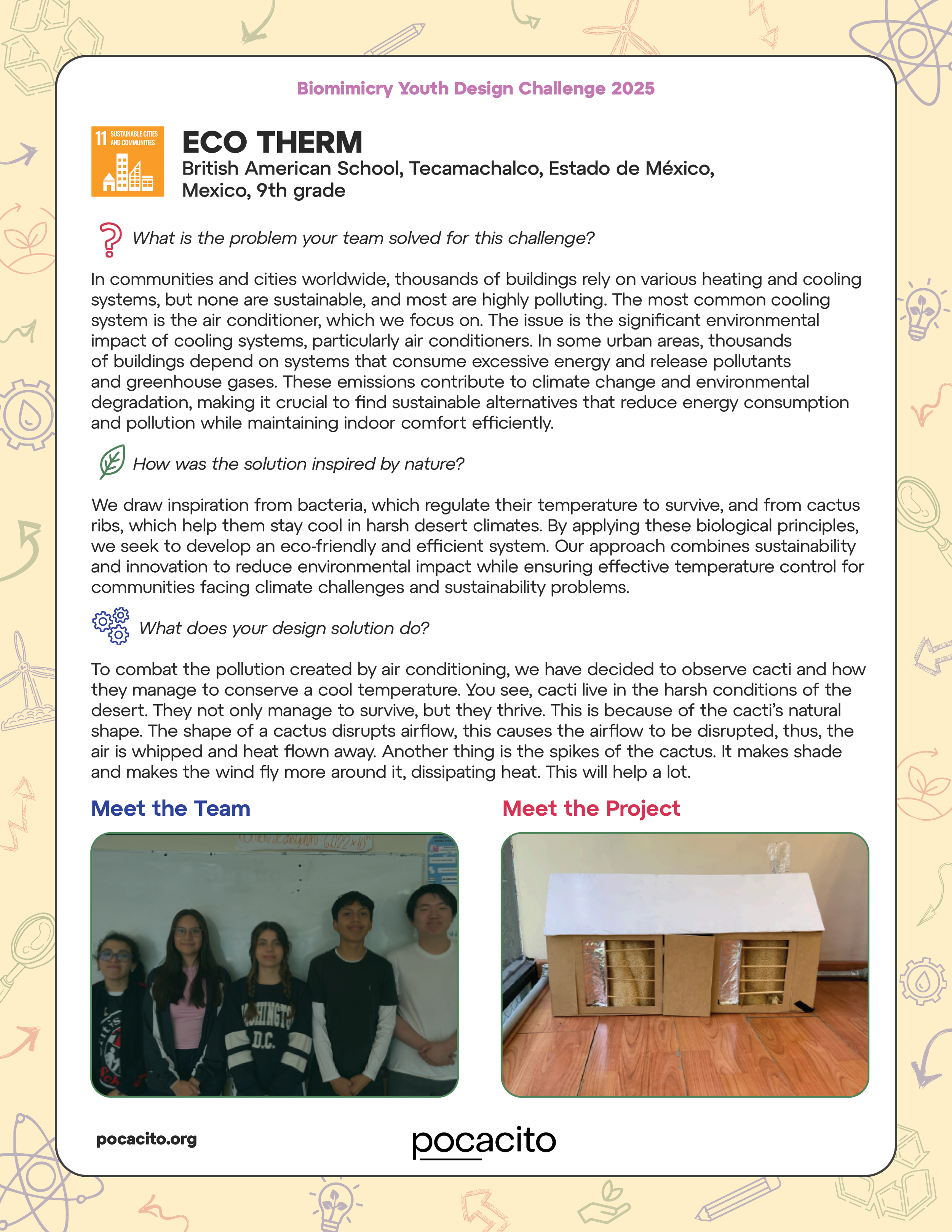
British American School, Tecamachalco, Estado de México, Mexico, 9th grade, ECO THERM
SDG 12 - Responsible consumption and production
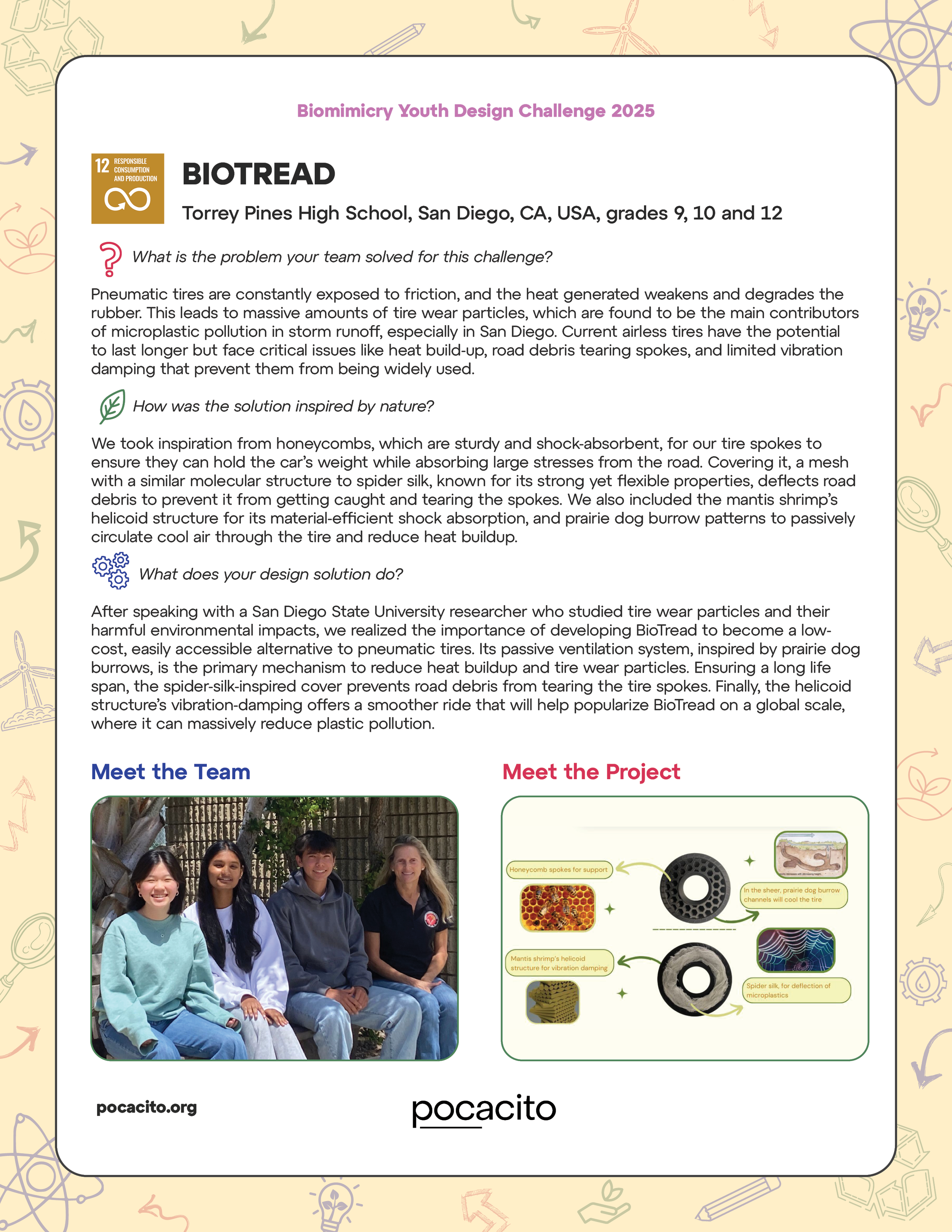
Torrey Pines High School, San Diego, CA, USA, grades 9, 10 and 12, BIOTREAD
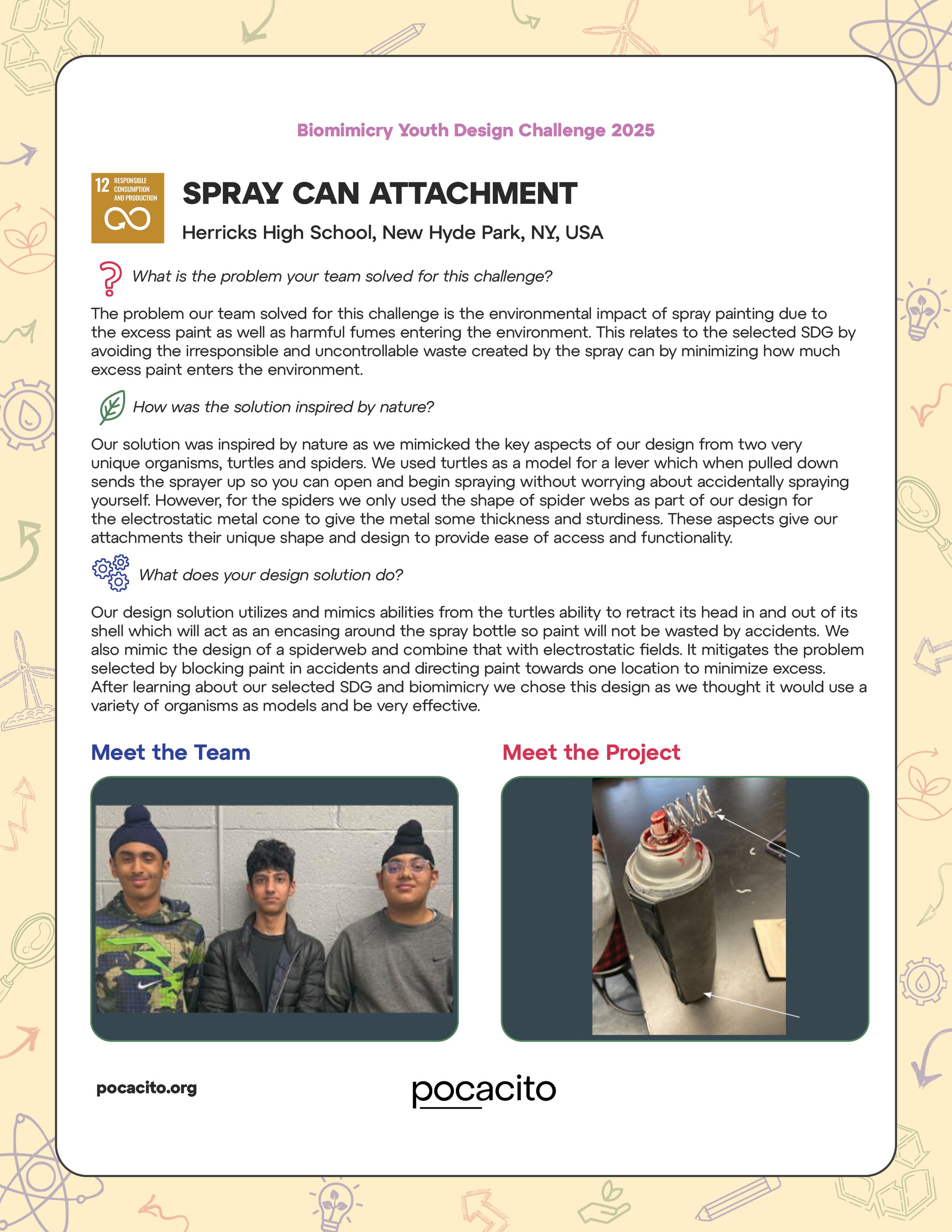
Herricks High School, New Hyde Park, NY, USA, SPRAY CAN ATTACHMENT
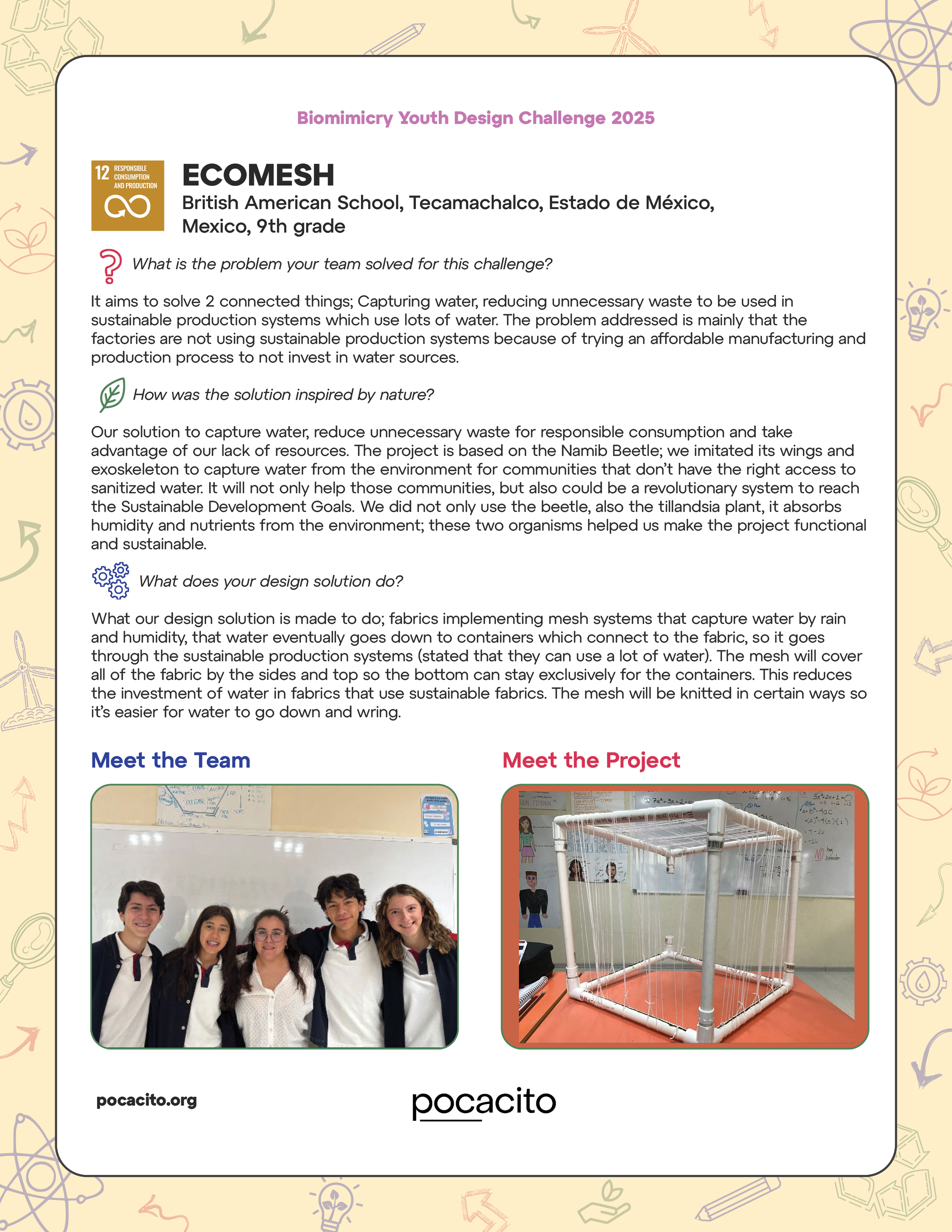
British American School, Tecamachalco, Estado de México, Mexico, 9th grade, ECOMESH
SDG 13 - Climate Action
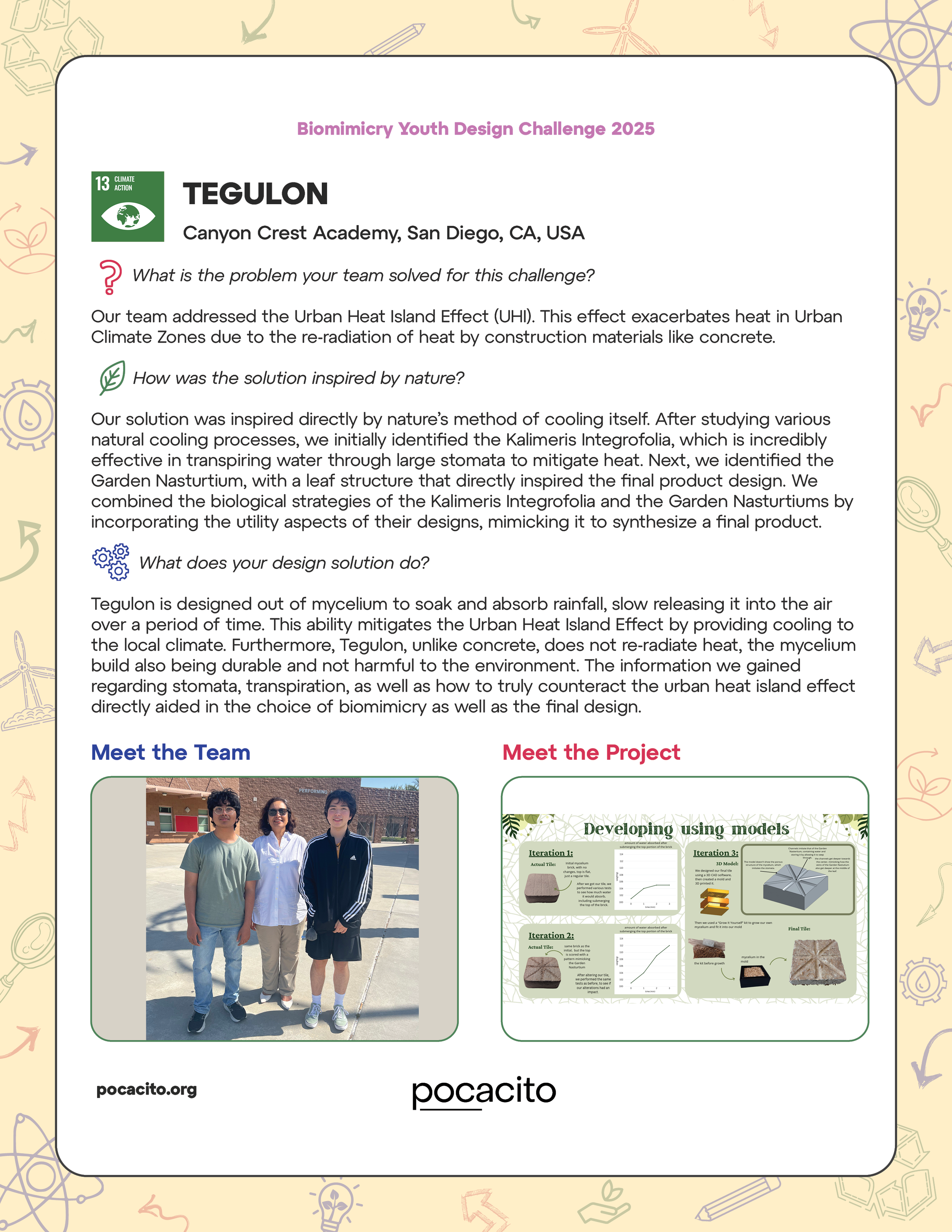
Canyon Crest Academy, San Diego, CA, USA, TEGULON
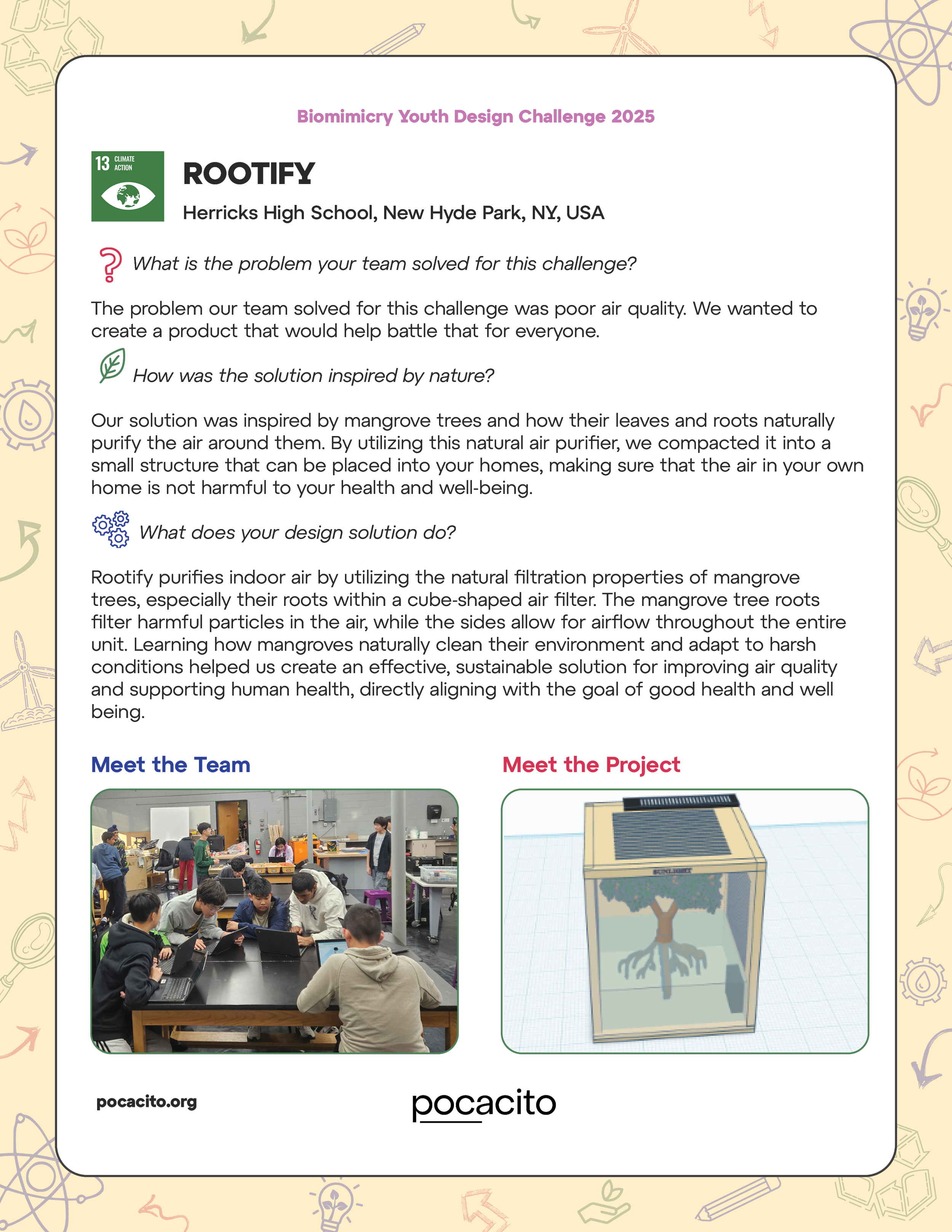
Herricks High School, New Hyde Park, NY, USA, ROOTIFY
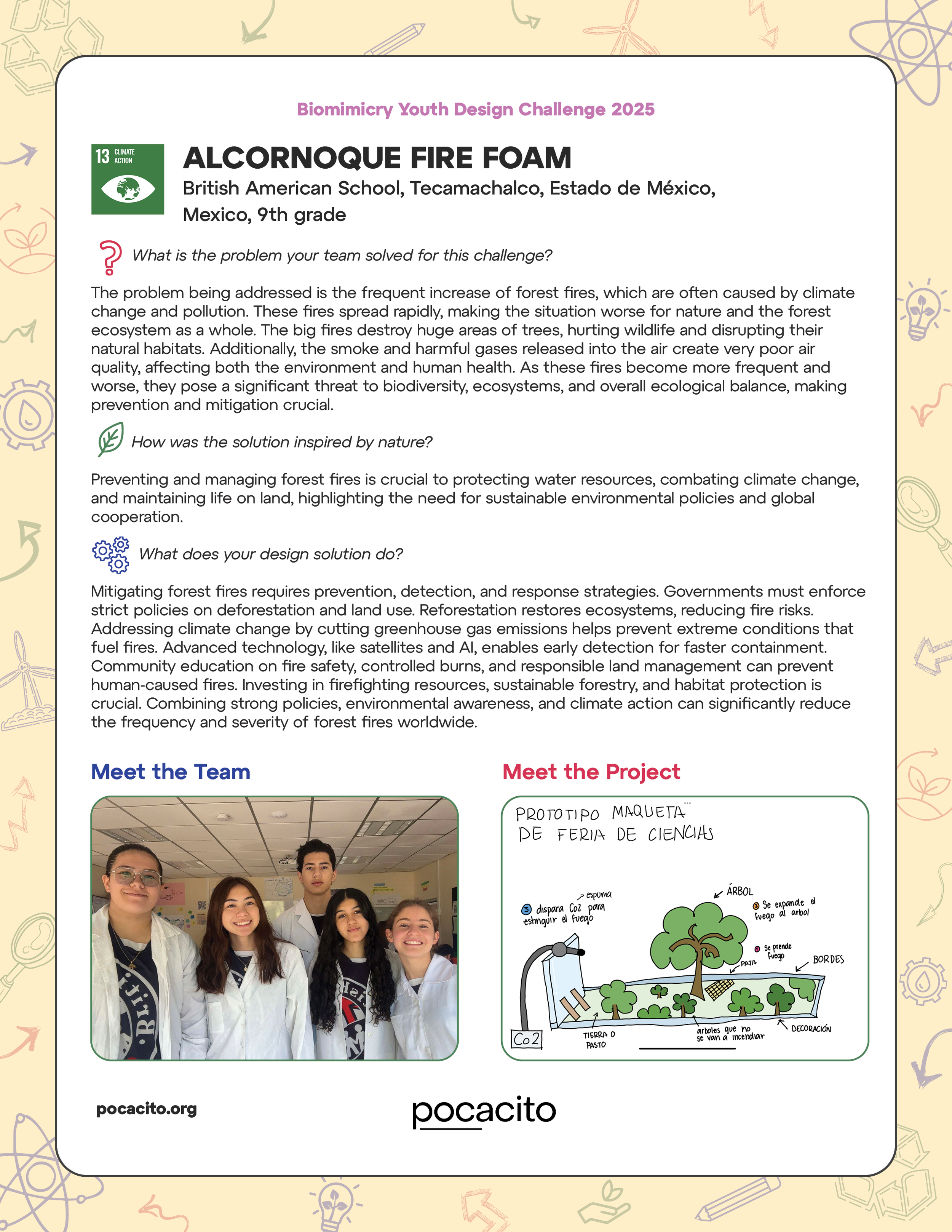
British American School, Tecamachalco, Estado de México, Mexico, 9th grade, ALCORNOQUE FIRE FOAM
SDG 14 - Life below water
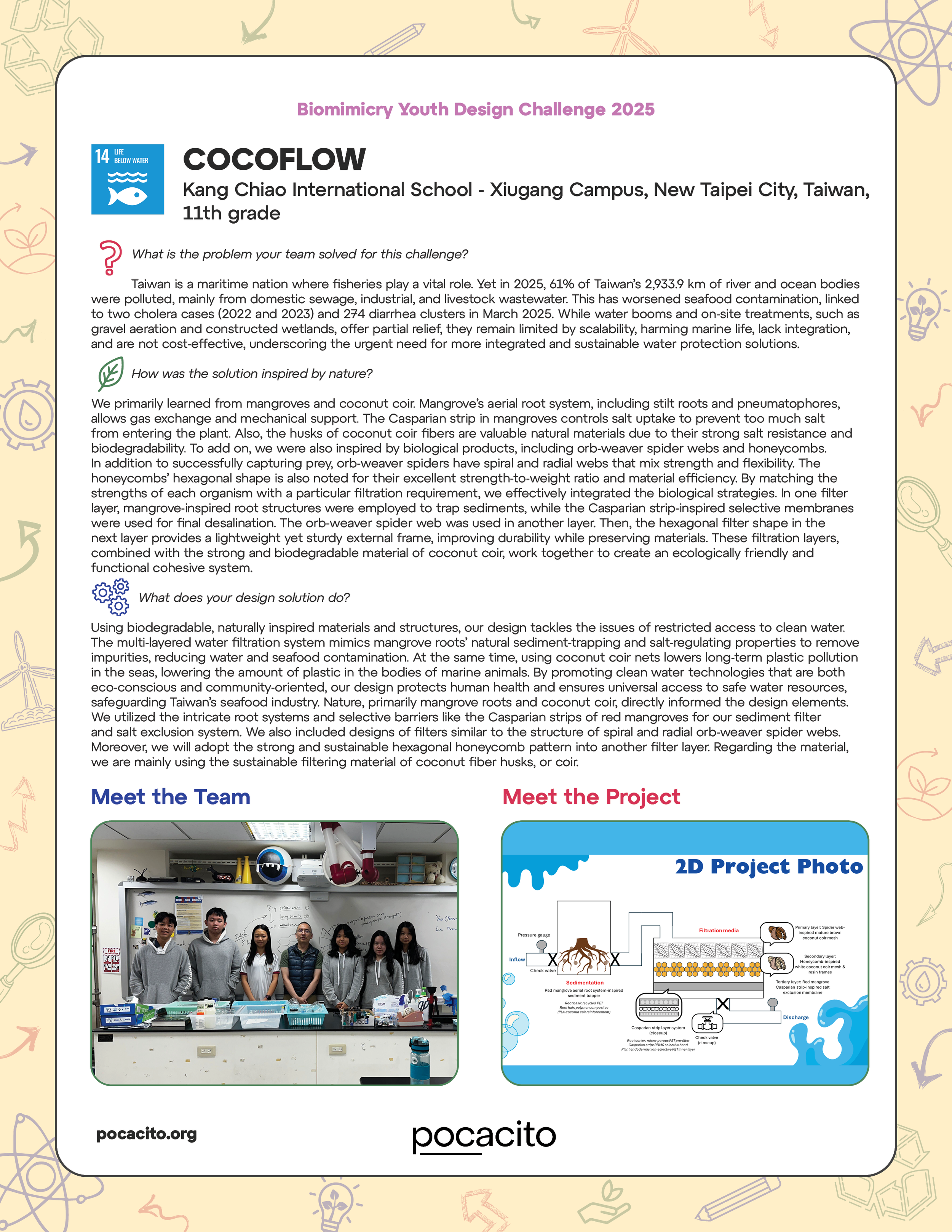
Kang Chiao International School - Xiugang Campus, New Taipei City, Taiwan, 11th grade, COCOFLOW
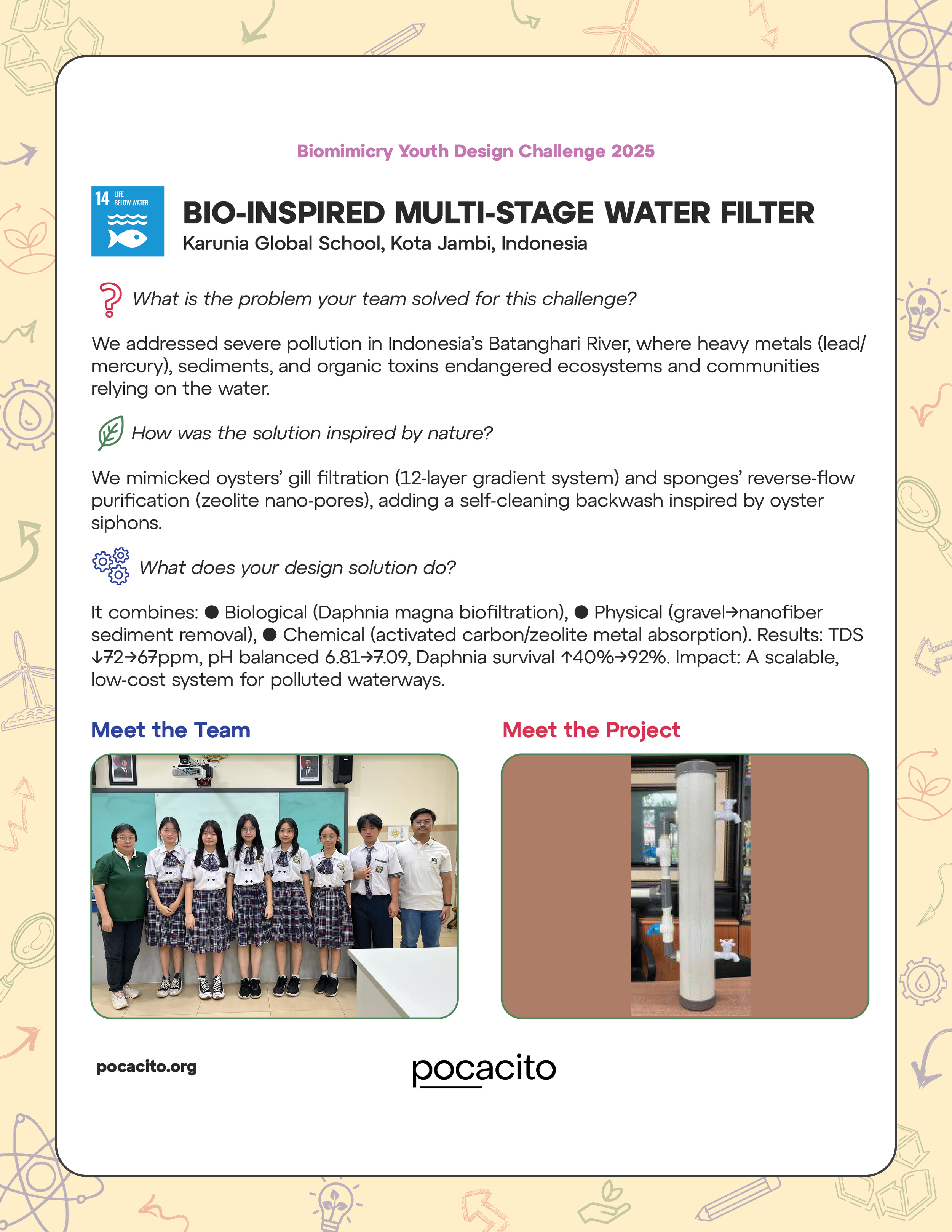
Karunia Global School, Kota Jambi, Indonesia, BIO-INSPIRED MULTI-STAGE WATER FILTER
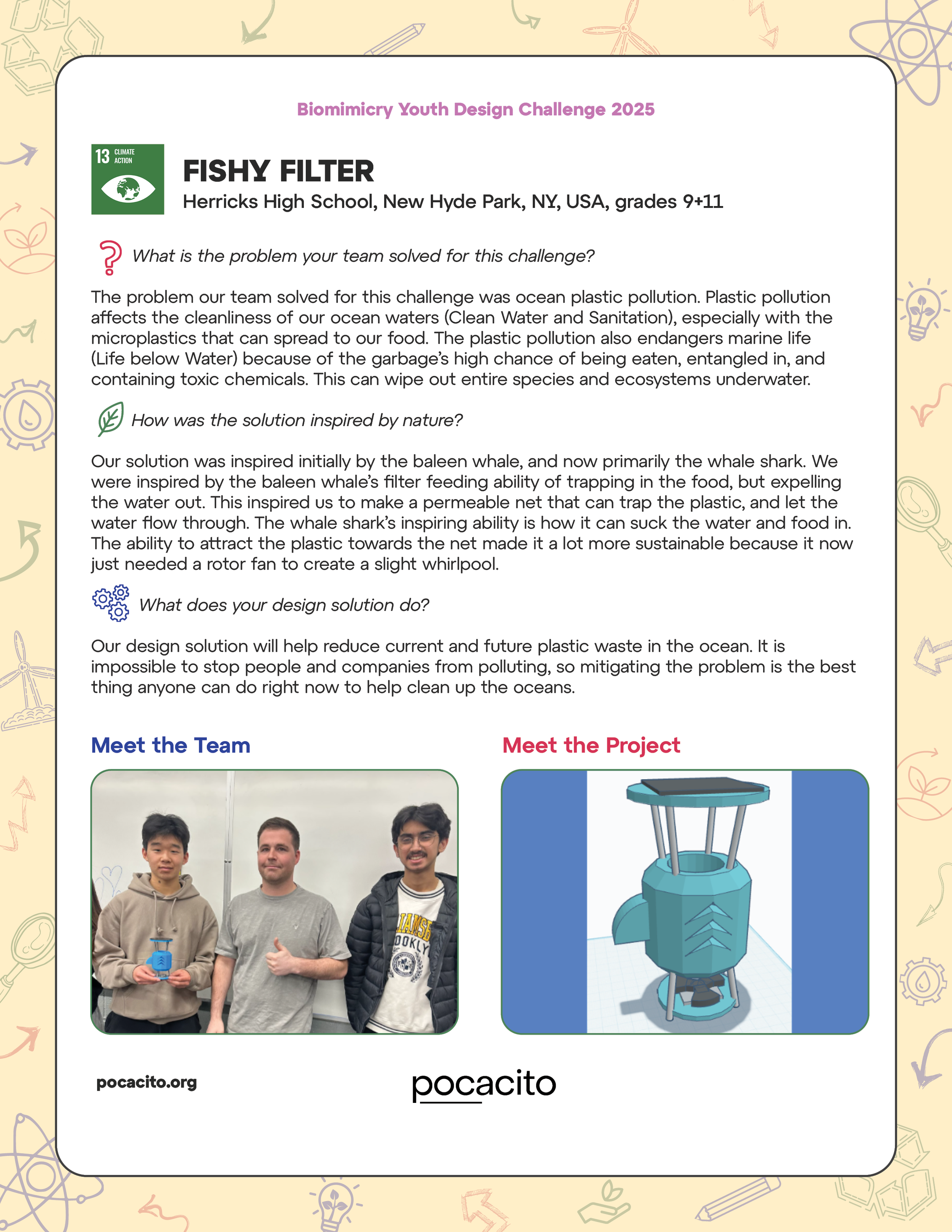
Herricks High School, New Hyde Park, NY, USA, grades 9+11, FISHY FILTER
SDG 15 - Life on land
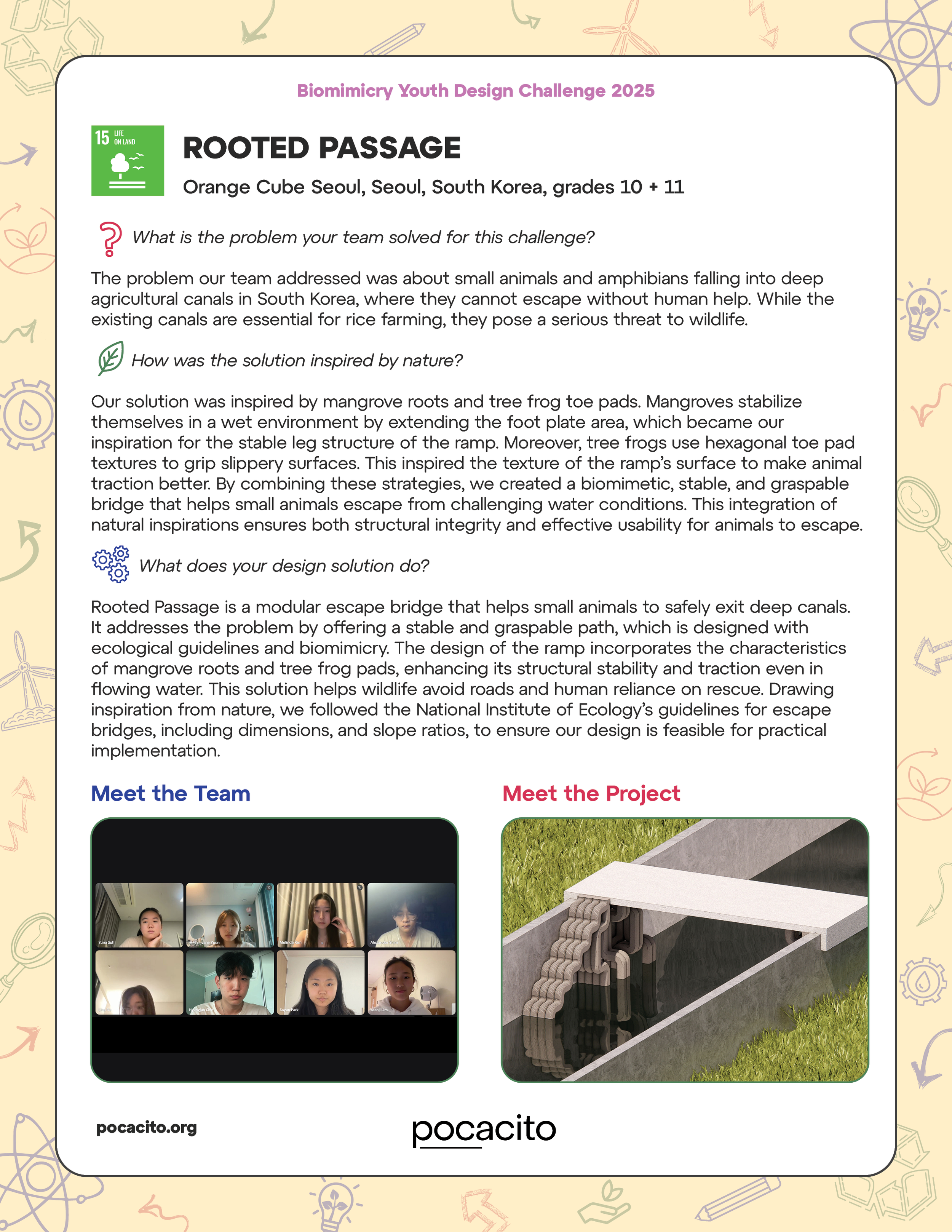
Orange Cube Seoul, Seoul, South Korea, grades 10 + 11, ROOTED PASSAGE
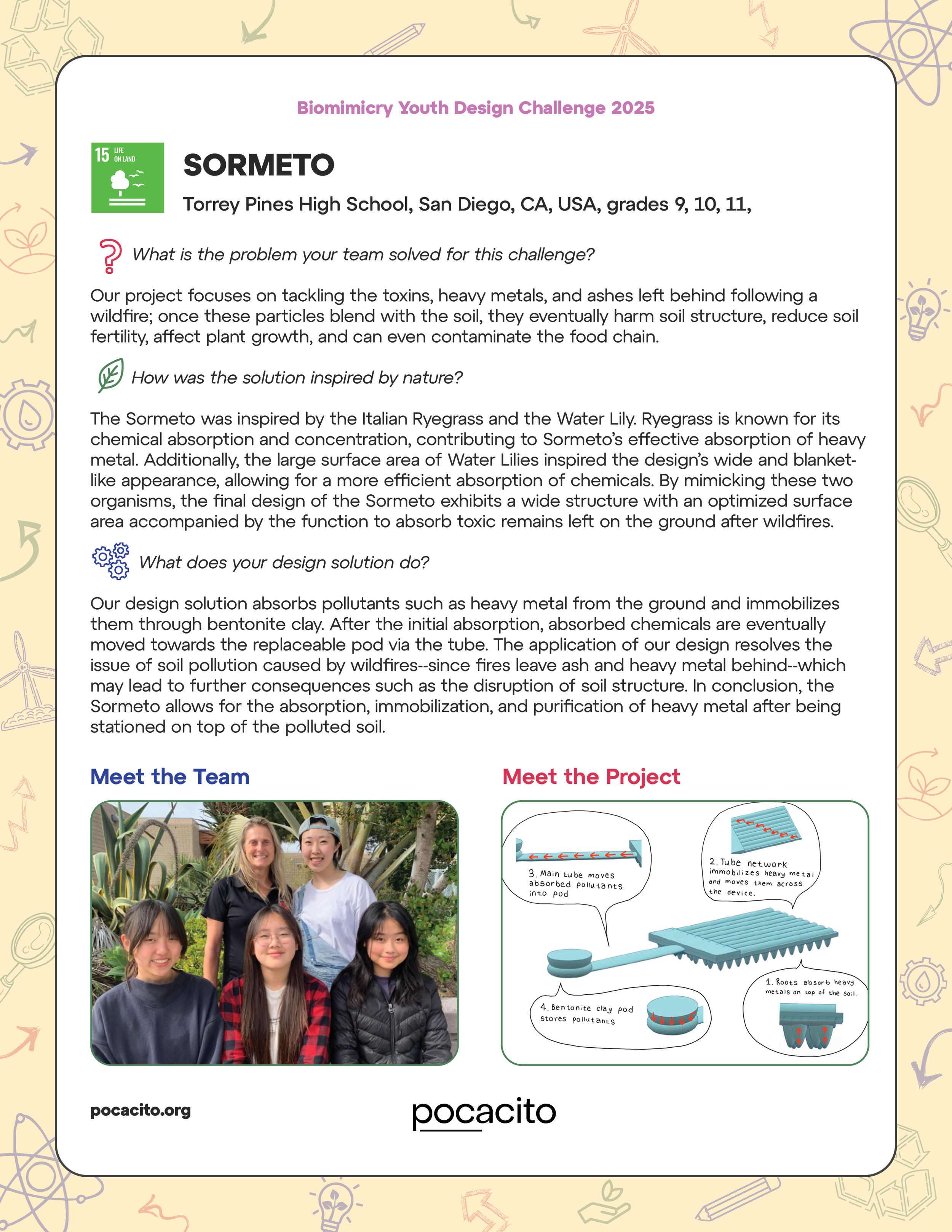
Torrey Pines High School, San Diego, CA, USA, grades 9, 10, 11, SORMETO
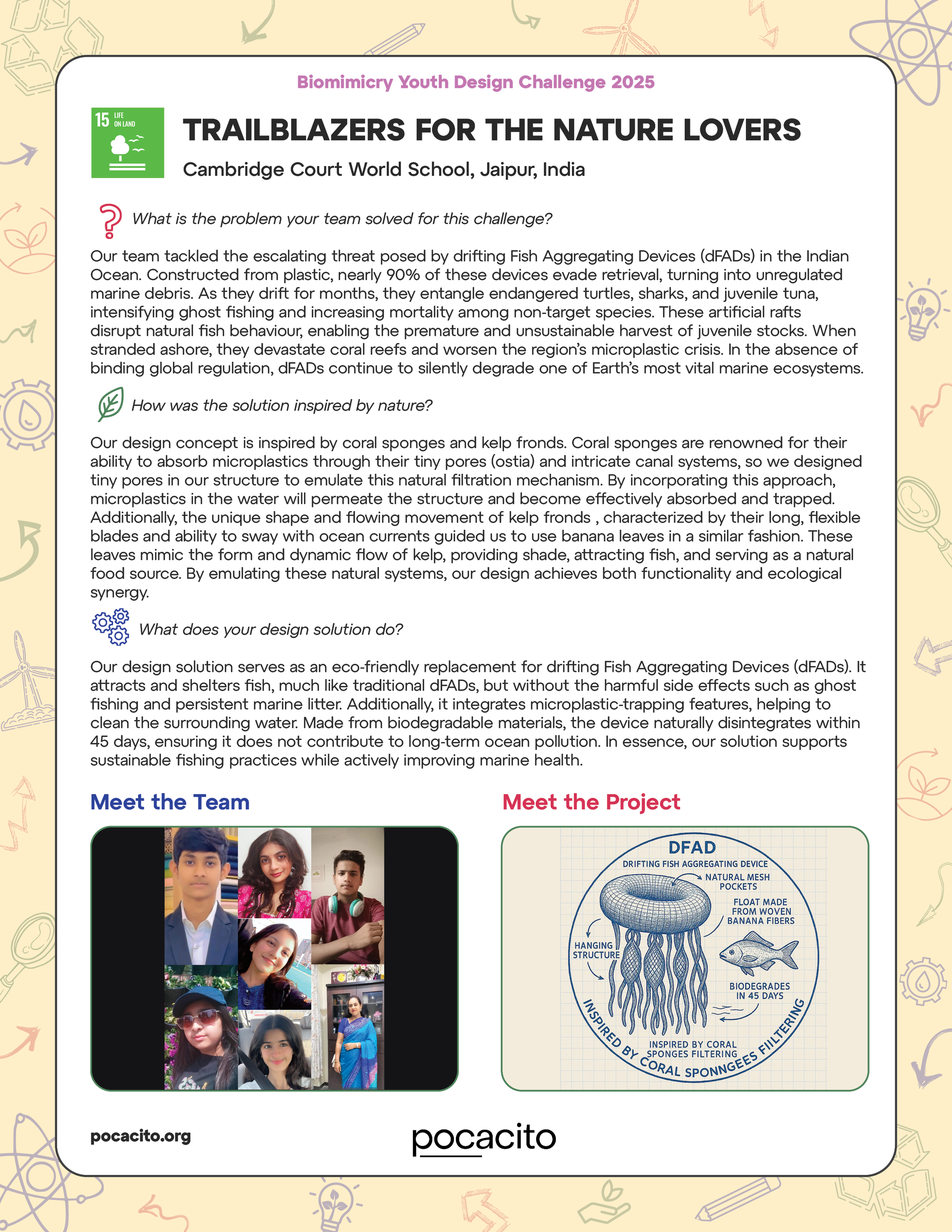
Cambridge Court World School, Jaipur, India, TRAILBLAZERS FOR THE NATURE LOVERS
Recognition
A big thank you to all.
Stay tuned for BYDC 2026. sign-up deadline is January 31

Meet the 2024 Youth Design Challenge Winners
2024 High School Awards

Oyster farming in South Korea is an industry that contributes to microplastic pollution in the ocean through degradation of buoys. Attempts at shifting from styrofoam to alternative materials like aluminum have failed in the past, so team Design Matter from Seoul decided to try to find a nature-inspired solution. Their design, Green Buoy, is a buoy made from chitofoam (a biodegradable material derived from mealworm exoskeletons) that elminates the risk of microplastic pollution and promotes sustainable marine farming. The team took inspiration from the aquatic Hydrocharis dubia plant, mimicking the dome-shaped air pockets of the plant to provide buoyancy. They designed the buoy connector modules by studying the way that seahorses use their tails to latch onto coral reefs. The Green Buoy could be the answer to finding a sustainable way to keep the oyster farming industry from further polluting South Korean waters with microplastics.
Green Buoy
1st Place:

The Beenard’s Canopy
2nd Place:
Access to clean and affordable drinking water is still not a universal reality, particularly in South Sudan, where waterborne diseases account for a high percentage of deaths among children. Team A Squared from Beijing wanted to address this problem, so they designed the Beenard’s Canopy. Inspired by the Namib Beetle, Moloch Lizard, and the Desert Rattlesnake, their device condenses the dew in the air, channels the collected water through a filter, and stores the water in a tank for drinking and sanitation purposes. The team mimicked a combination of water collection and transport strategies found in nature, adding a hydrophobic surface, hydrophilic bumps, and capillary channels to their design. The idea addresses the problem of lack of access to clean water by providing an economically viable solution.

3rd Place:
In recent years, atmospheric rivers have caused massive flooding in California, and yet, for most of this team’s life, California has been in a drought. Tackling both problems at once, the team designed a rain catchment device that could also address the issue of urban flooding. The Rain Net is a series of tubes that create a “net” around an area and divert water towards one single point. Inspired by capillary action found in plants and the branching patterns of leaf veins, the Rain Net has xylem-inspired tubes that divert, collect, and filter rainwater. The invention could be modified to fit any roof and the design makes it possible to connect multiple “nets,” allowing for more than one drainage system.
Rain Net

Honorable Mention:
Flash floods can cause tremendous damage to both people and ecosystems. This team from Bekasi, Indonesia aimed to mitigate the impact of flash floods through their invention, the Antrodam. The Antrodam’s curved inflatable walls would act as a dam, directing flood waters away from buildings and cultural heritage sites. The team, the Antologists, got their main inspiration from Indian Harvester Ant nests, which divert water away from the entrance of the nest. The Antrodam design enables the walls to be inflated and deflated according to need, a feature that arose from studying the giant pill millipede’s strategy of rolling into a tight ball when threatened, and the male frigatebird’s puffed throat. The outward curvature of the walls, which direct the flow of the water, mimics lettuce leaf coral and rose petals. The design is intended to protect both people and infrastructure as flash floods become an increasingly common occurrence in Indonesia due to climate change.
Antrodam
2024 Middle School awards

1st Place:
The practice of bottom trawling, in which a net is dragged along the seafloor to catch fish, damages marine ecosystems. Team Bubbl hoped that their innovation would promote a new way to practice sustainable fishing while protecting marine life. Their device, the Bubbl, produces a cylinder of bubbles to attract fish, a strategy common to whales, and has a reflective surface, just like the beaks of Black Skimmer birds, which attract fish when their beaks reflect light. Team Bubbl’s design attempts to create a more sustainable method of fishing that can protect aquatic ecosystems and allow marine organisms to thrive.
Bubbl

Rising salinity levels are causing ecosystem disruption in the Florida Everglades and posing a threat to local sources of drinking water. Team Desalinator addressed this issue by creating a device to filter excess salt out of water. The Desalinator contains layered filters consisting of semi-permeable membranes that suck in saltwater and expel desalinated water. The team mimicked clam siphons, which intake and release water, and the hexagonal shape of honeycombs, used to maximize space efficiently and minimize material usage. By design, when the filters reach capacity, sensors would alert scientists to replace them, an idea inspired by salt glands and the osmoregulation process of seabirds.
Desalinator
2nd Place:

3rd Place:
Poor sanitation has a staggering effect on human health and well-being around the world. To address this issue, team BioBlackford from San Jose, CA designed a low-cost self-cleaning panel, the Anisoptera Panel. The team took inspiration from the panel’s namesake, the Latin word for dragonfly, by mimicking the microscopic spikes on dragonfly wings, which kill bacteria and prevent infection. Another inspiration was the superhydrophobic surface of lotus leaves, which enables the leaves to repel water and debris. To connect their panel to existing walls, the team mimicked strategies of adhesion used by mussels. The team hopes that their innovation can reduce the amount of deaths from bacterial infection and the spread of disease in communities across the globe.
Anisoptera Panel

Honorable Mention:
“Dead zones” in the ocean can be caused by algal blooms, which prevent oxygen and sunlight from reaching the organisms beneath them. A team from Applewild School in Massachusetts addressed this issue by creating an algae filter that doesn’t require electricity. Their Anti-Algae Bloom Filter mimics the basking shark’s method of ram feeding, in which a shark employs a filter-feeding technique with its open mouth. The team’s device traps algae in its mesh filters just as basking sharks trap zooplankton in their gill rakers. The team hopes that their nature-inspired design will have a positive impact on aquatic ecosystems, and also pointed out that the collected algae could be used as a renewable fuel source.
Anti-Algae Bloom Filter
